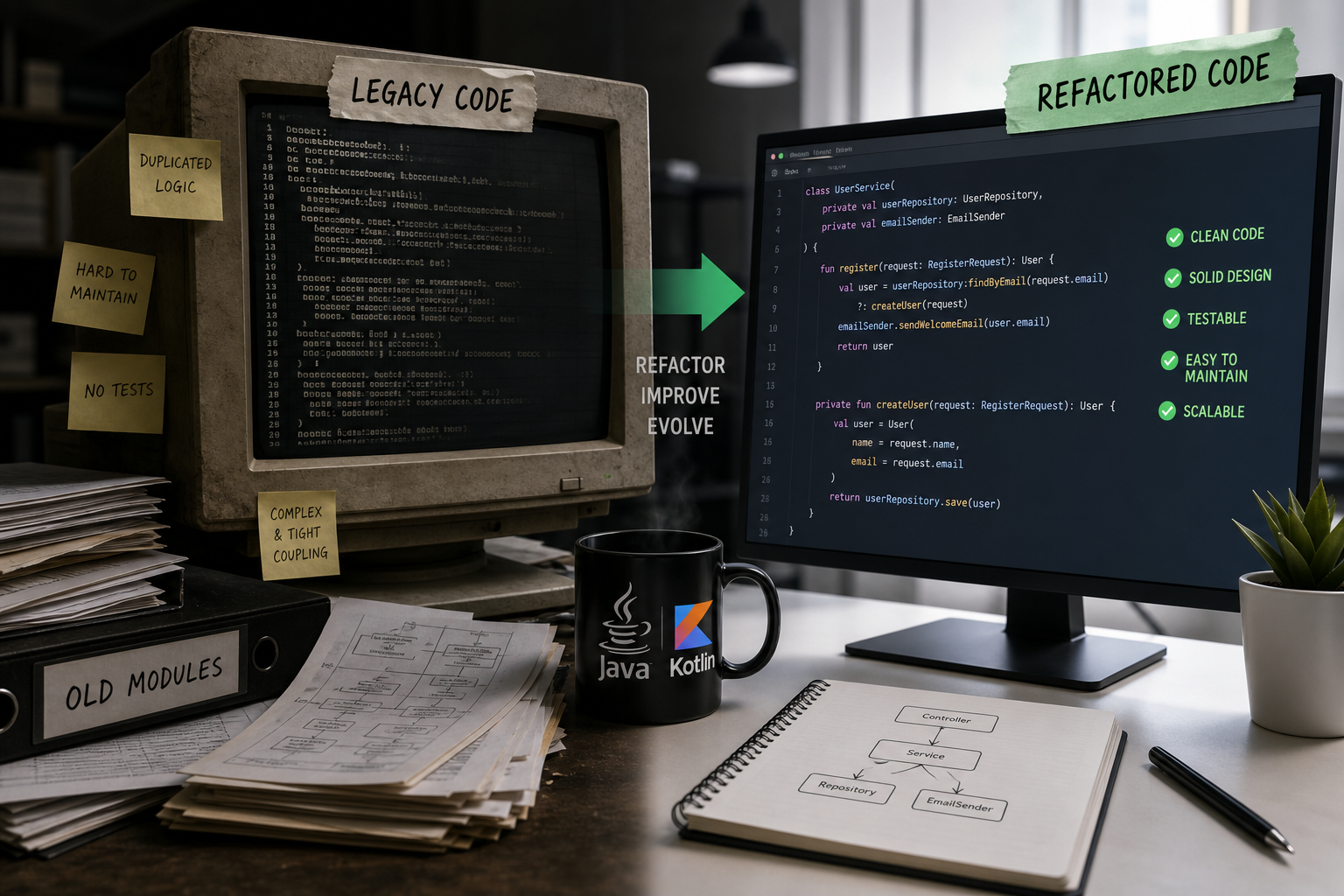
Why Refactor Legacy Code?
Refactoring legacy code has become an imperative necessity in modern software development. Systems that once were viewed as robust can now be burdened with technical debt, increasing latency and complicating maintenance tasks. By refactoring, we eliminate this technical debt and pave the way for future enhancements.
Design Patterns to Consider
Using Design Patterns to Improve Structure
Implementing design patterns during refactoring is essential. Patterns like Singleton, Factory, and Observer not only enhance code readability but also create a more solid foundation for modularity and scalability, thereby facilitating the integration of new features.
Unit Testing as Refactoring Support
How Unit Tests Save the Process
When dealing with legacy code, it’s crucial to incorporate unit testing from the outset. Unit tests act as a safety net, ensuring that modifications do not break existing functionality. Additionally, they allow for early error detection and document the expected behavior of the system.
Beginner Mistakes in Refactoring
- Not implementing unit tests before starting refactoring.
- Attempting to refactor all code at once, which can lead to monumental disasters.
- Ignoring existing documentation, which could lead to misunderstandings about code functionality.
Conclusion: A Path to Sustainability
Refactoring legacy code can be a challenging process, but it is also highly rewarding. By incorporating design patterns and unit testing, you can transform your application’s legacy into a functional and sustainable foundation. Remember, the success of refactoring lies in a methodical approach and the value it adds to the software lifecycle.
Keywords: Unit testing, patrones de diseño, deuda técnica
Views: 33