Introduction: The Future of AI at the Edge
Artificial intelligence is on the brink of a technological revolution, and its implementation in low-power devices like the Raspberry Pi is one of the most intriguing areas. With tools like Mano.i and Ollama, running language models locally (or local inference) is no longer a distant dream but an accessible reality. But how can you thrive in an environment with limited RAM while harnessing these innovations?
The Science Behind Local Inference
Local inference involves running machine learning models directly on a device, eliminating the need for remote server connections. This not only reduces latency but also enhances privacy by keeping data local. Language models (LLMs) have evolved to be more resource-efficient, allowing their use even on devices with limited RAM. Understanding how these models work is key to effective implementation.
Mano.i and Ollama: Innovative Tools
Mano.i provides an optimized environment for managing language models, offering intuitive interfaces and flexible configurations that simplify execution on small devices. On the other hand, Ollama enables the deployment of LLMs with a simple command, transforming how developers can access powerful AI tools. Both platforms are designed to maximize performance in hardware-constrained environments.
Practical Implementation Guide
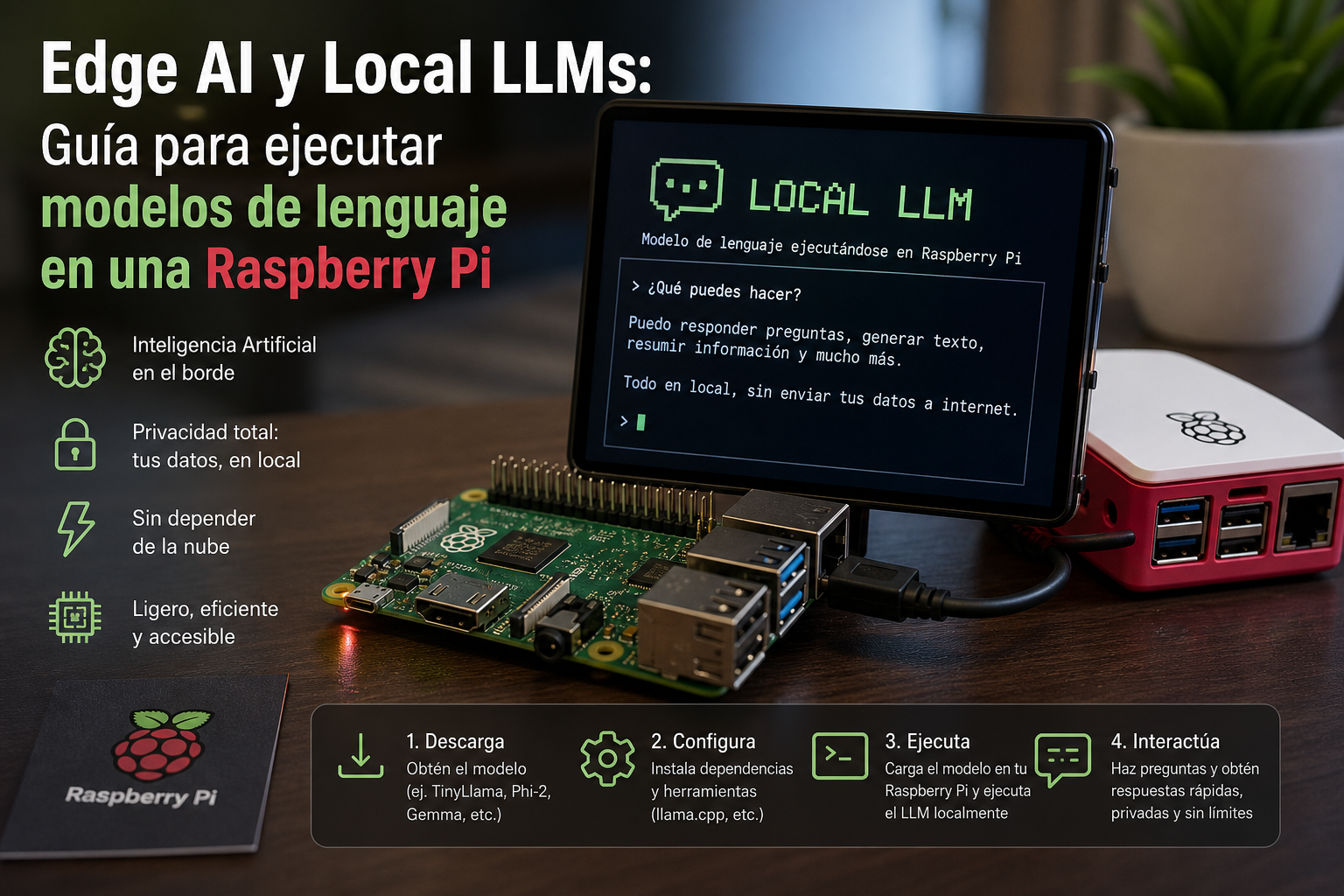
To start running language models on your Raspberry Pi, follow these steps:
- Install Mano.i: Set up your Raspberry Pi following the installation instructions. Ensure you have the latest version of the operating system.
- Download and configure Ollama: Use simple commands to install and manage language models. Explore the documentation to better understand its capabilities.
- Optimizations: Adjust model parameters to optimize RAM usage. This may involve reducing model size or tuning precision.
Common Mistakes and Best Practices
When implementing AI on a Raspberry Pi, it’s easy to fall into common pitfalls:
- Underestimating processing power: Not all models are suitable; choose one that fits your device’s capabilities.
- Neglecting memory optimization: Working with large models can quickly drain RAM. Always look for lighter models or compression techniques.
- Lack of thorough testing: Conduct extensive testing to ensure the model performs as expected before production.
Conclusion: The Gateway to Innovation in AI
Running language models on devices like the Raspberry Pi is not just possible; it’s exciting. With the right tools, such as Mano.i and Ollama, and by following best practices, you can explore the frontiers of Edge AI. Remember, success lies in experimentation and optimization.
Keywords: Mano.i, Ollama, inferencia local, RAM limitada
Views: 41