Introduction
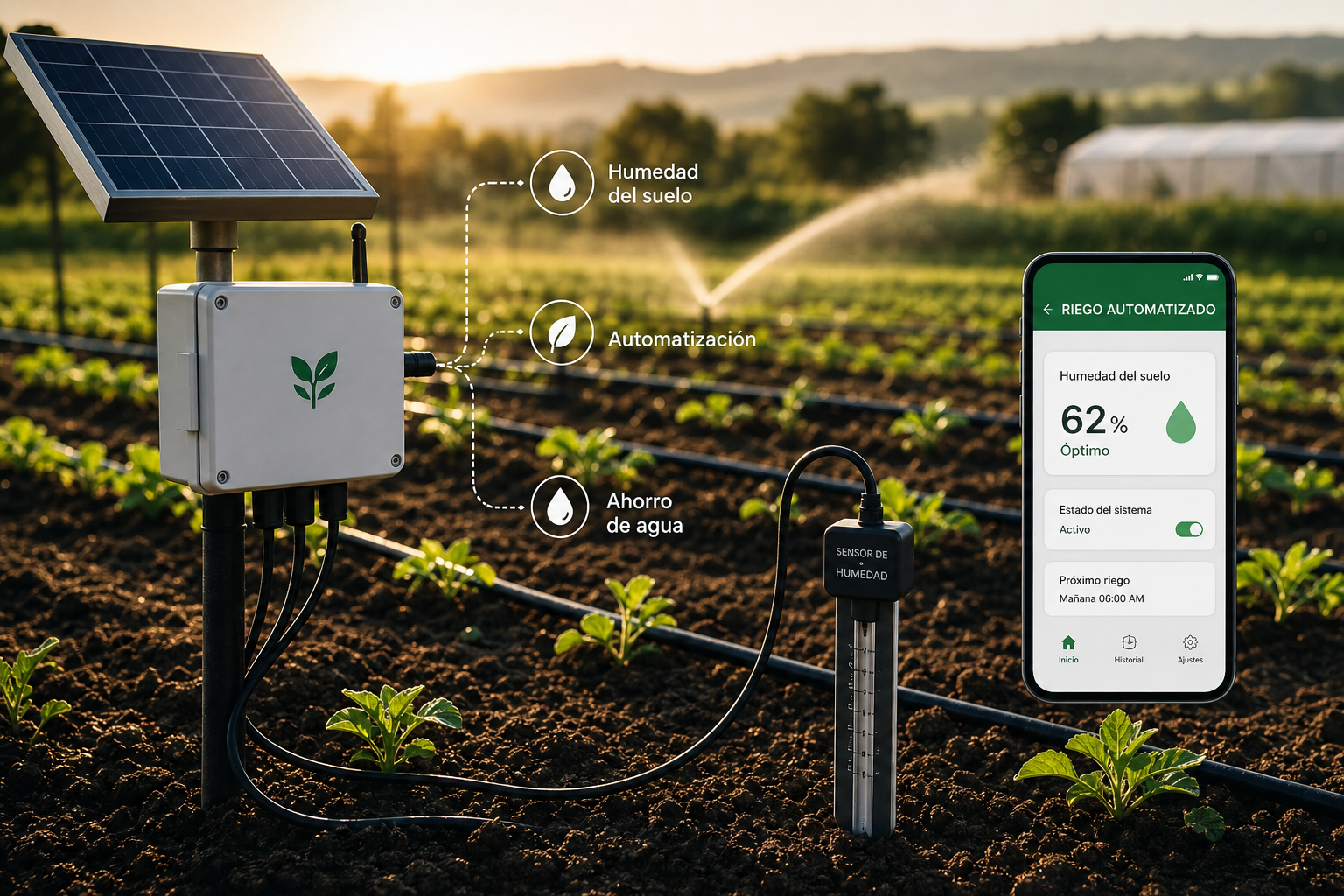
Did you know that over 70% of freshwater use goes to agriculture? Agricultural automation represents a practical solution to enhance resource efficiency, particularly in water management. In this article, we will explore how to design an automated irrigation system using microcontrollers and soil moisture sensors.
Key Components of the System
Microcontrollers: The Brain of the System
Microcontrollers, such as Arduino or ESP8266, are essential for automation. These devices process the information gathered by sensors and control the electric valves that activate watering. Programming these microcontrollers is relatively straightforward and allows for great flexibility in system design.
Electric Valves: Efficient Flow Control
Electric valves are fundamental for effective watering. They integrate into the piping system and regulate the flow of water according to the microcontroller’s instructions. Choosing the right type of valve and ensuring its proper calibration are crucial to avoid pressure issues and ensure each plant receives the right amount of water.
Sensor Calibration and Substrate Selection
Calibration of moisture sensors is essential for optimal operation. It’s important to adjust thresholds so the system activates watering only when truly necessary. Additionally, considering the type of substrate is vital, as different materials have varying water retention capacities. This directly impacts the frequency and duration of watering.
Beginner Mistakes and Best Practices
- Not properly calibrating sensors: This can lead to inefficient watering.
- Incorrect installation of electric valves: Ensuring they are well-positioned can prevent leaks and water wastage.
- Ignoring substrate type: Choosing an unsuitable substrate can result in an ineffective system.
Conclusion
Agricultural automation not only optimizes water usage but also facilitates the development of sustainable practices. With a well-designed system and attention to calibration and component selection details, your automated irrigation system can make a significant difference in crop productivity. Remember, the key lies in experimentation and continuous adjustment; don’t hesitate to test and correct as needed!
Keywords: Microcontroladores, electroválvulas, calibración, sustrato
Views: 29