
A New Era for Chainsaw Man
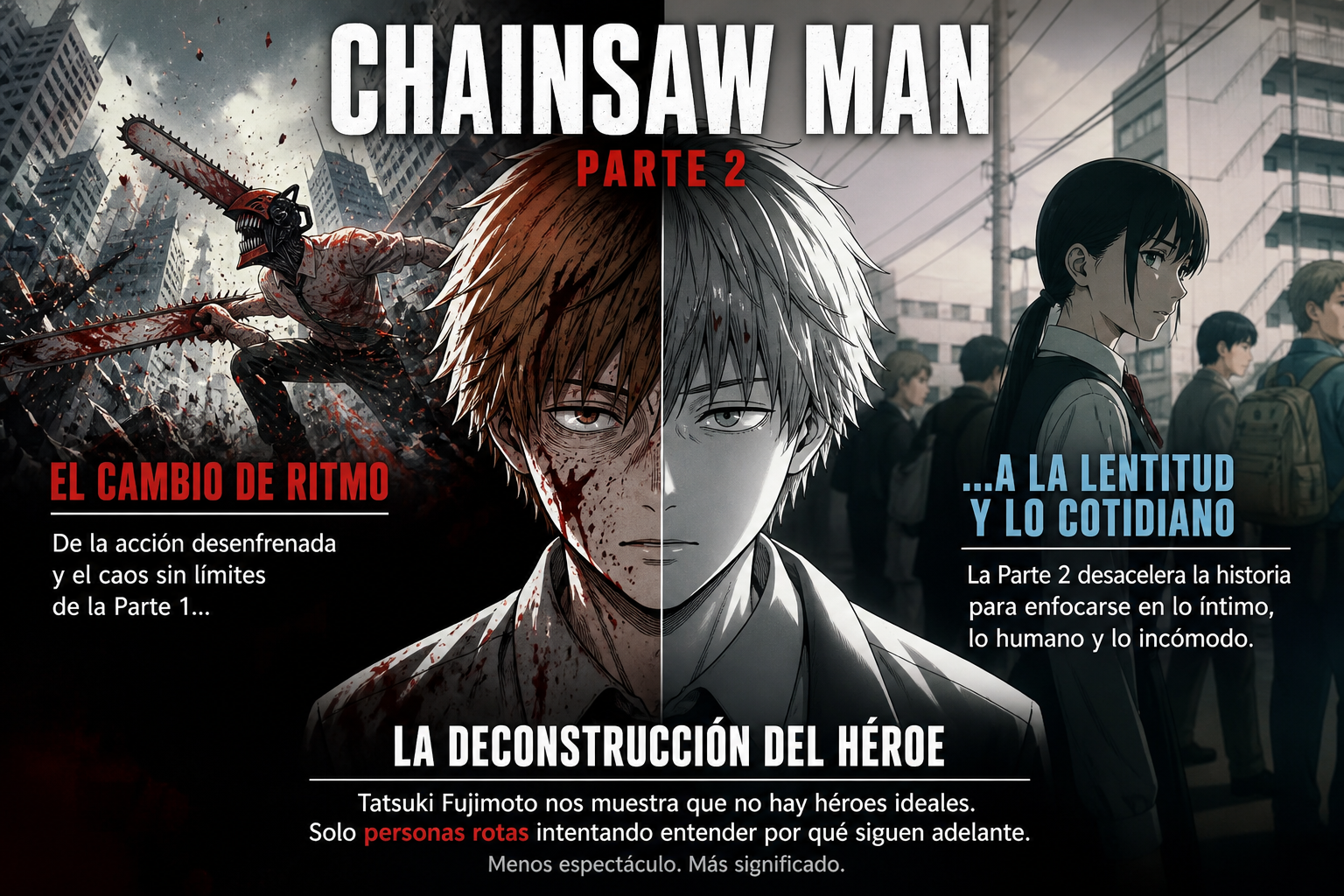
The arrival of Part 2 of Chainsaw Man has sparked a whirlwind of emotions and expectations among manga fans. The visual narrative of Tatsuki Fujimoto continues to surprise, but this time it does so not just with unabashed action, but with a shift in pace that deconstructs the traditional hero figure. What lies behind this evolution of style, and what does it mean for characters like Denji and Asa Mitaka?
From Action to Introspection
Denji’s Emotional Journey
In Part 2, Denji, our protagonist, has embarked on a journey filled with disillusionment. The series moves away from the typical modern shonen narrative, opting instead to explore the hero’s internal struggles. With a focus on introspection, the story allows readers to dive into Denji’s psychology, who is no longer just in search of action, but of recognition and personal happiness. This shift starkly contrasts with Part 1, where the frantic pursuit of power and emotions dominated the scene.
Asa Mitaka: A New Kind of Hero
The introduction of Asa Mitaka adds another layer of complexity to the narrative. Unlike Denji, she represents a deconstruction of the heroic archetype, characterized not just by her abilities, but by her own insecurities and conflicts. Her interactions with Denji create a narrative space where both characters reveal their vulnerabilities, something uncommon in shonen manga, where strength typically takes center stage.
Surprising Visual Narrative
A Style that Challenges Conventions
Tatsuki Fujimoto has taken his evolution of style to the next level. With bold use of visual narrative, the panels become a means of emotional expression, where each stroke tells its own story. The way action scenes are presented, intermixed with moments of calm, creates a contrast that immerses the reader in the experience. This technique is not only visually captivating but also reinforces deep themes of loneliness and the search for identity.
Common Mistakes When Approaching Chainsaw Man Part 2
- Ignoring Character Development: New characters bring with them emotional richness that shouldn’t be underestimated.
- Focusing Only on Action: While there are impactful action scenes, the story requires a deeper read.
- Underestimating Visual Narrative: How Fujimoto illustrates each scene is essential to understanding the plot and its nuances.
Conclusion: An Invitation to Reflect
Part 2 of Chainsaw Man is not just a continuation; it’s a reimagining of the concept of the hero in contemporary manga. As the story unfolds, we are invited to reflect on our own internal struggles and the search for identity. For readers, it serves as a reminder that strength doesn’t always lie in physical prowess, but in the ability to confront the emotional realities of life. Are you ready to look beyond the fights and immerse yourself in a world where introspection is as vital as action?
Keywords: Denji, Asa Mitaka, narrativa visual, Shonen moderno, evolución de estilo
Views: 25