
Introduction
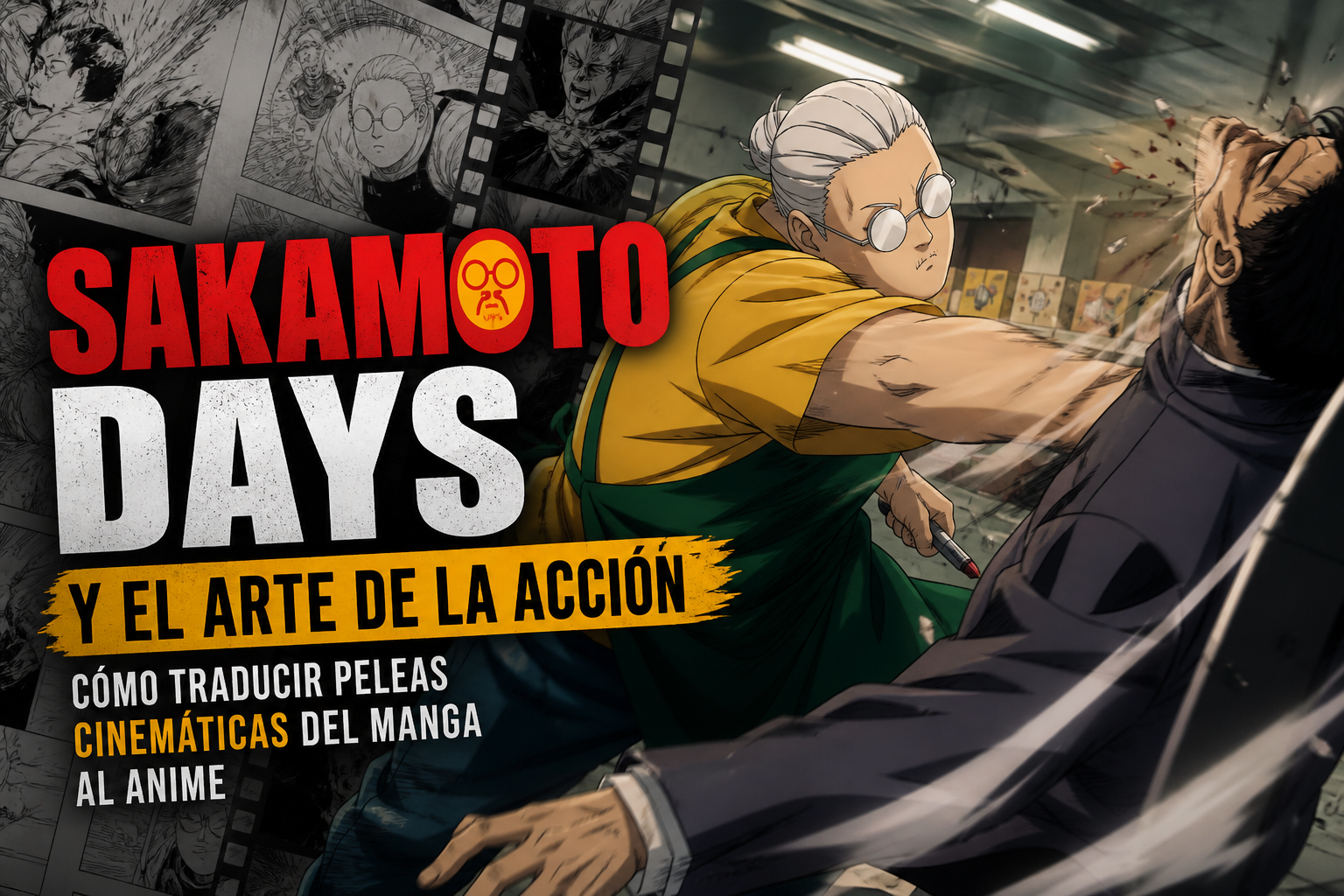
Adapting a manga into an anime is not merely an illustration process; it’s a meticulous dance that combines artistic direction with action choreography. Sakamoto Days, the work of Yuto Suzuki, excels at translating the kinetic energy and emotion of fights onto the screen. How is this frame fluidity achieved to keep viewers on the edge of their seats?
Choreography and Camera Direction
The Art of Choreography
The fights in Sakamoto Days are meticulously crafted, taking every movement into account. Choreography is fundamental to conveying the intensity of battles. A key concept is visual rhythm, which allows the audience to feel each hit and dodge in real-time. Smooth transitions between shots help ensure that viewers retain emotional connection with the characters.
Camera Direction
Camera direction is another pillar in capturing action. The choice of angle and focus can completely alter the perception of a fight. In anime, techniques like panning, where the camera follows character movements, and zooming in during critical moments intensify the emotional weight of a scene. This complements the choreography and ensures viewers feel part of the action.
Frame Fluidity in Animation
Achieving Fluidity
Frame fluidity is essential for making action scenes realistic. In Sakamoto Days, rhythm breaks are employed, alternating between high and low frame rates to create tension. This allows quick scenes to maintain attention and clarity. Additionally, motion interpolation techniques are used to smooth transitions, resulting in an immersive visual experience.
Common Pitfalls in Action Animation
- Lack of Continuity: Abrupt changes in direction or character positioning that break immersion.
- Uneven Rhythm: Failing to maintain a balance between fast and slow moments, leading to viewer fatigue.
- Sync Issues: Failures in syncing sound with action, which detracts from what could be an intense fight.
Tips for a Successful Adaptation
When adapting Sakamoto Days or any action manga, it’s crucial to maintain the essence of the original work. Listening to fans and observing how they interact with scenes is vital for refining a smooth transition that respects the original choreography. The key is to capture the energy of the action. The best results come from a collaborative approach among animators, writers, and directors, allowing each element to provide coherence to the visual narrative.
Conclusion
The magic of Sakamoto Days lies in its ability to merge action and emotion. To achieve effective adaptation, choreography, camera direction, and frame fluidity must be viewed as a whole. Always remember that an effective fight is not just about fast movements, but a story told frame by frame.
Keywords: Coreografía, fluidez de fotogramas, Yuto Suzuki, dirección de cámaras, ritmo visual
Views: 66