Introduction
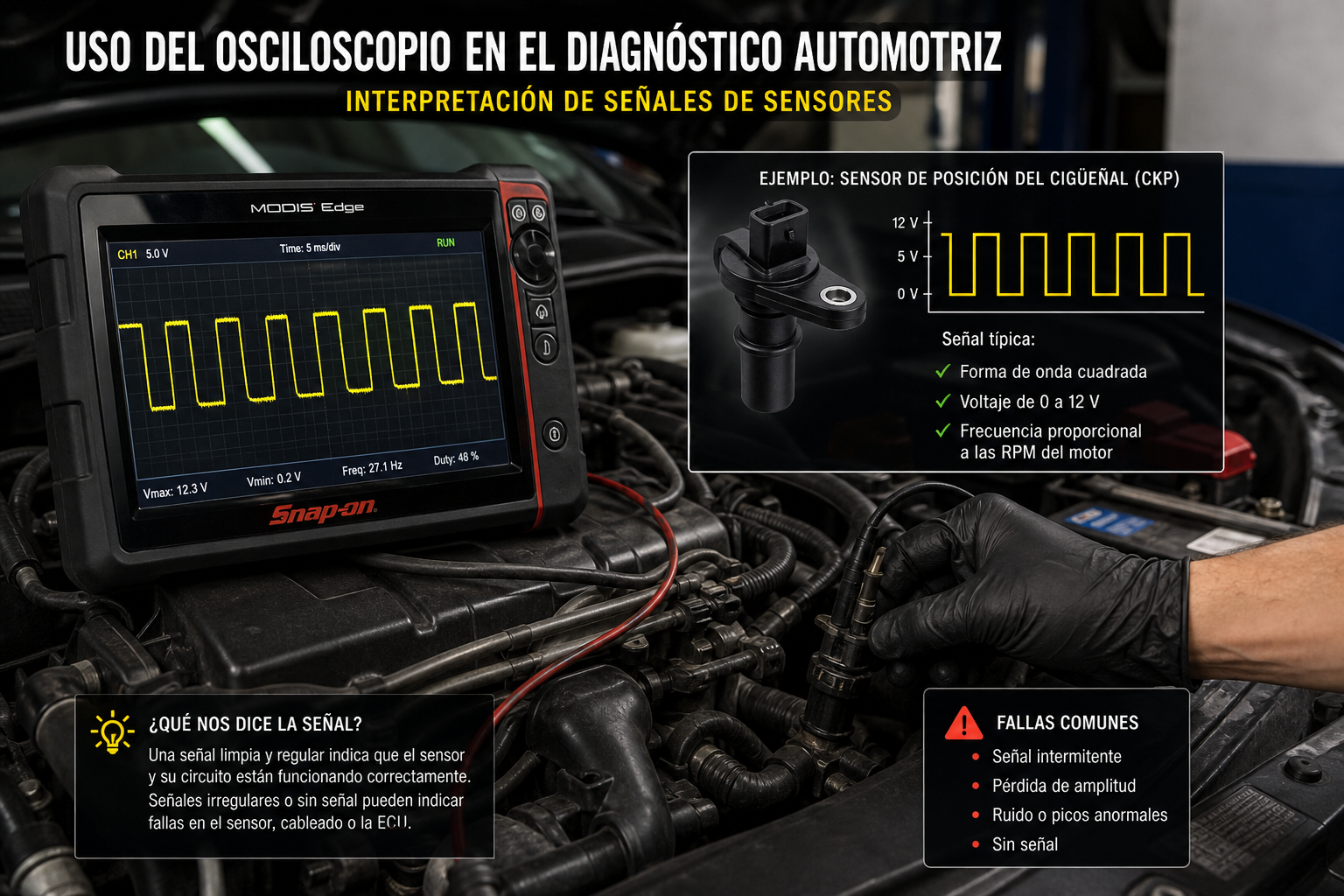
Did you know that many mechanical problems in a car can be revealed through waveform analysis? An oscilloscope is an indispensable tool for automotive technicians, allowing them to visualize and diagnose electrical signals from various sensors, like the CKP (Crankshaft Position) sensor. In this article, we will explore how to interpret these signals for effective diagnostics.
Interpreting Electrical Signals
CKP Sensor Waveforms
The CKP sensor generates a voltage signal that varies based on the crankshaft’s position. By using an oscilloscope, we can observe this waveform to detect issues such as timing misalignments or signal failures. Peaks in the waveform represent crankshaft positions, and a stable signal indicates proper functioning.
Diagnosing the Alternator
The alternator is critical for the vehicle’s electrical system. By connecting an oscilloscope, we can examine the waveform of the alternator’s output signal. A stable sinusoidal waveform indicates a properly functioning alternator. However, pulsations or irregular waveforms may indicate issues with the rectifier diode or charging problems.
Bus Data Analysis
Modern vehicles utilize a data bus for communication between electronic modules. By using an oscilloscope with the proper adapter, we can capture signals from the data bus. A clear waveform without interference ensures that the modules are communicating effectively, while a distorted signal may indicate communication problems or faulty hardware.
Conclusion
Using an oscilloscope in automotive diagnostics is crucial for accurately identifying and resolving issues. For technicians, mastering waveform interpretation can make the difference between a quick and precise diagnosis and a prolonged fault-finding process. Always remember to check the stability of the signals and use appropriate settings to achieve optimal results.
Keywords: Formas de onda, sensor CKP, alternador, bus de datos
Views: 38