Imagine being able to prepare every dish with a precision that rivals that of a professional chef. The home sous-vide technique allows you to achieve this through vacuum cooking, ensuring that your meats, vegetables, and even desserts cook evenly and preserve their flavor. With a simple immersion circulator, you can turn your kitchen into a culinary laboratory where thermal balance is key to perfection.
The Science of Sous-Vide
Sous-vide cooking involves sealing food in airtight bags and immersing them in a hot water bath at a controlled temperature. This technique ensures that each food item cooks to perfection, avoiding the variances that can arise with traditional methods. For example, cooking a piece of meat at 56 °C for several hours allows you to achieve a tender, juicy texture that would be difficult to attain in a pan. The precise temperature control prevents overcooking, allowing flavors and moisture to remain intact.
Temperature and Time Control
One of the greatest benefits of sous-vide cooking is the extreme control you have over temperature and cooking time. For example, if you choose to cook a steak at 54 °C, you can do so for 1 to 4 hours and still achieve an optimal texture, while in a pan, a split second more could ruin the dish. It’s crucial to have a good thermometer and a reliable immersion circulator to ensure even and effective cooking.
Equipment Needed for Home Sous-Vide
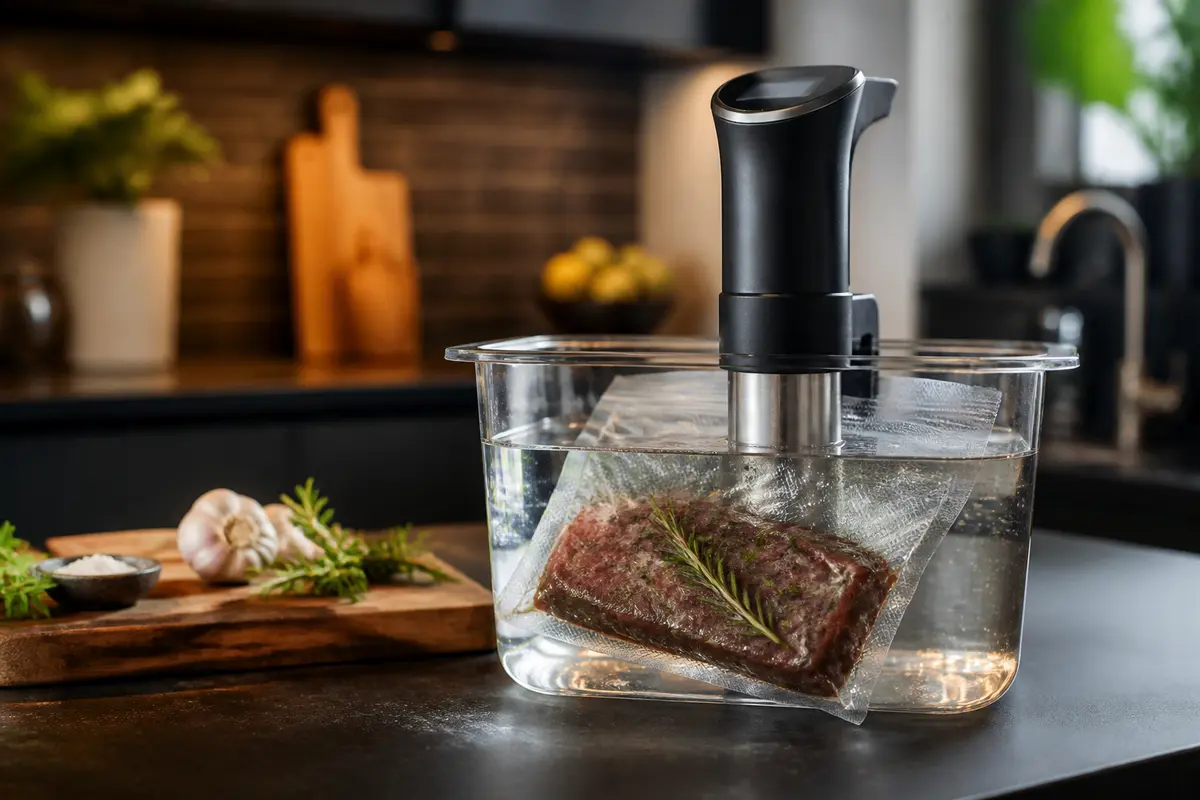
You don’t need professional kitchen equipment to perform sous-vide at home. An immersion circulator is the only essential device you’ll need. With a good model, you can control water temperature to a precision of up to 0.1 °C. Additionally, you’ll need vacuum-sealed bags or heat-resistant bags and a large container that can hold enough water to submerge your food. Some cooks prefer to use a slow cooker as an alternative, but results can vary.
Preparing Your Food
When preparing your food for sous-vide, be sure to season the ingredients properly before sealing them. You can add herbs, spices, or even a little olive oil to enhance the flavor. It’s advisable to avoid adding liquids in the bag, as this can interfere with vacuum cooking. After sealing the food, place the bag in the hot water bath and ensure it doesn’t float, allowing heat to circulate effectively.
Common Mistakes and Best Practices
One of the most common mistakes when practicing sous-vide is not preheating the water before immersing the food. This can negatively affect the cooking process and impact the final texture. Also, be sure not to exceed the recommended cooking time, especially with more delicate foods like fish. Remember that even after reaching the desired temperature, the food will continue to cook slowly in its own heat. Keep an eye on timing intervals and adjust your preparations based on the type of food you are cooking.
Conclusion
The home sous-vide technique not only allows you to achieve spectacular results in your meals but also simplifies the cooking process. With an immersion circulator and a bit of patience, any cook can master the art of vacuum cooking. Don’t hesitate to try this technique that will provide professional-quality results in every dish you prepare.
Keywords: sous-vide casero, coccion al vacio, circulador inmersion, equilibrio termico
Views: 5