Introduction: Revolutionizing Site Supervision
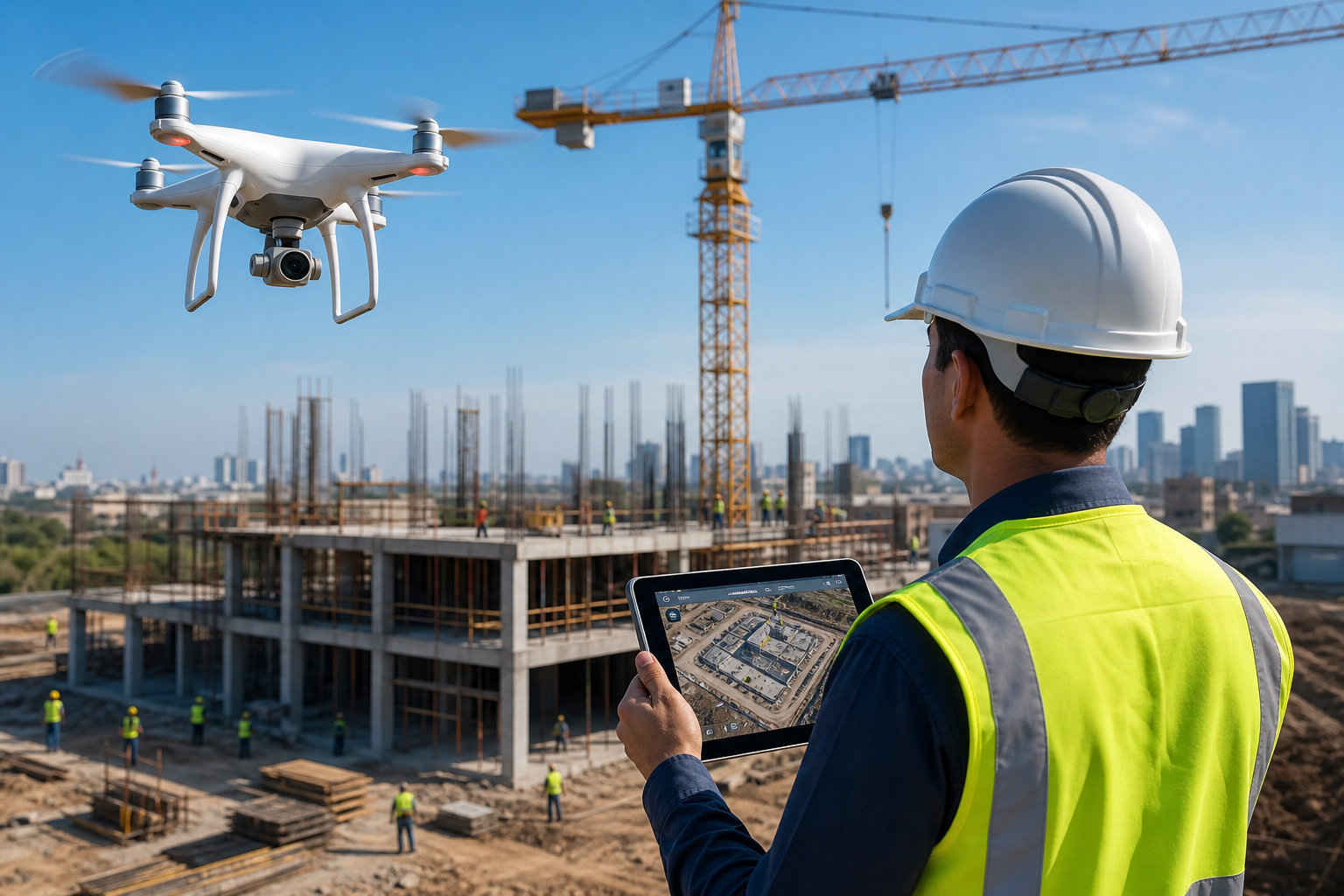
In the digital age, construction site supervision has undergone a significant transformation thanks to the use of drones. These devices not only provide an aerial view of progress but also offer unprecedented precision in data collection. How are drones impacting photogrammetry, topography, and safety on construction sites? Let’s break down these key points.
Photogrammetry: Capturing Details from the Sky
Photogrammetry, the science of obtaining measurements from photographs, has been enhanced by the use of drones. Equipped with high-resolution cameras, drones can capture aerial images that, when processed, generate 3D models and topographic maps. This approach not only improves accuracy in project planning but also minimizes human errors in field measurements.
Benefits of Drone-Based Photogrammetry
- Reduced Work Time: Drones can cover large areas in minutes, drastically cutting down the data collection time.
- Accessibility: They can reach difficult areas, providing precise data without risking worker safety.
- Real-Time Analysis: Data can be analyzed almost instantly, allowing for quick adjustments to the project.
Topography: Precision and Efficiency on the Ground
Topography is essential in any construction project. Drones transform this process by allowing detailed terrain information to be gathered in less time. Traditionally, topography required physical presence on-site, involving manual measurements and often lengthy hours of work. With drone usage, data collection becomes a quick and efficient task.
Drone Topography Techniques
- Topographic Surveying: Enables the creation of detailed maps of the terrain with millimeter precision.
- 3D Modeling: Facilitates the visualization of site topography, essential for project design.
- Change Monitoring: Drones allow for comparisons of data at different times, aiding in progress tracking.
Worksite Safety: A Bird’s Eye View
Safety is a critical aspect of construction work, and drones play a fundamental role by allowing continuous site monitoring. With an aerial view, potential risks can be identified before they escalate into major issues. This early intervention not only protects workers but also improves project efficiency.
Safety Best Practices
- Regular Inspections: Conduct scheduled flights to check site conditions.
- Equipment Monitoring: Ensure that equipment is properly placed and functioning to prevent accidents.
- Proper Training: Educate personnel on drone usage and risk identification from the air.
Conclusion: A Step Towards the Future
The use of drones in construction supervision has marked a milestone in the industry. Not only does it increase precision and efficiency, but it also fosters a safer working environment. For those considering implementing this technology, the practical advice is to start with a pilot project, assessing the benefits before full adoption. The future of construction is airborne!
Keywords: Fotogrametría, topografía, seguridad
Views: 53