The restoration of vehicle dashboards may seem daunting, but it doesn’t have to be. Plastic welding, especially when it comes to ABS plastics, provides a durable and effective solution to repair damages that would otherwise cost a fortune. Want to breathe new life into your car’s interior without breaking the bank? Read on to discover everything you need to know and the steps to follow.
Understanding ABS Plastic
ABS (Acrylonitrile Butadiene Styrene) is a commonly used material in automotive manufacturing due to its strength and durability. This plastic is known for its impact resistance and easy moldability. For these reasons, it is used in dashboards, door panels, and other interior elements. Plastic welding becomes a viable repair option because it allows the joints to be nearly as strong as the original material. To effectively weld, it’s essential to understand the structure of the surface to be repaired and have the right tools, such as an automotive soldering iron.
Tools and Materials Needed
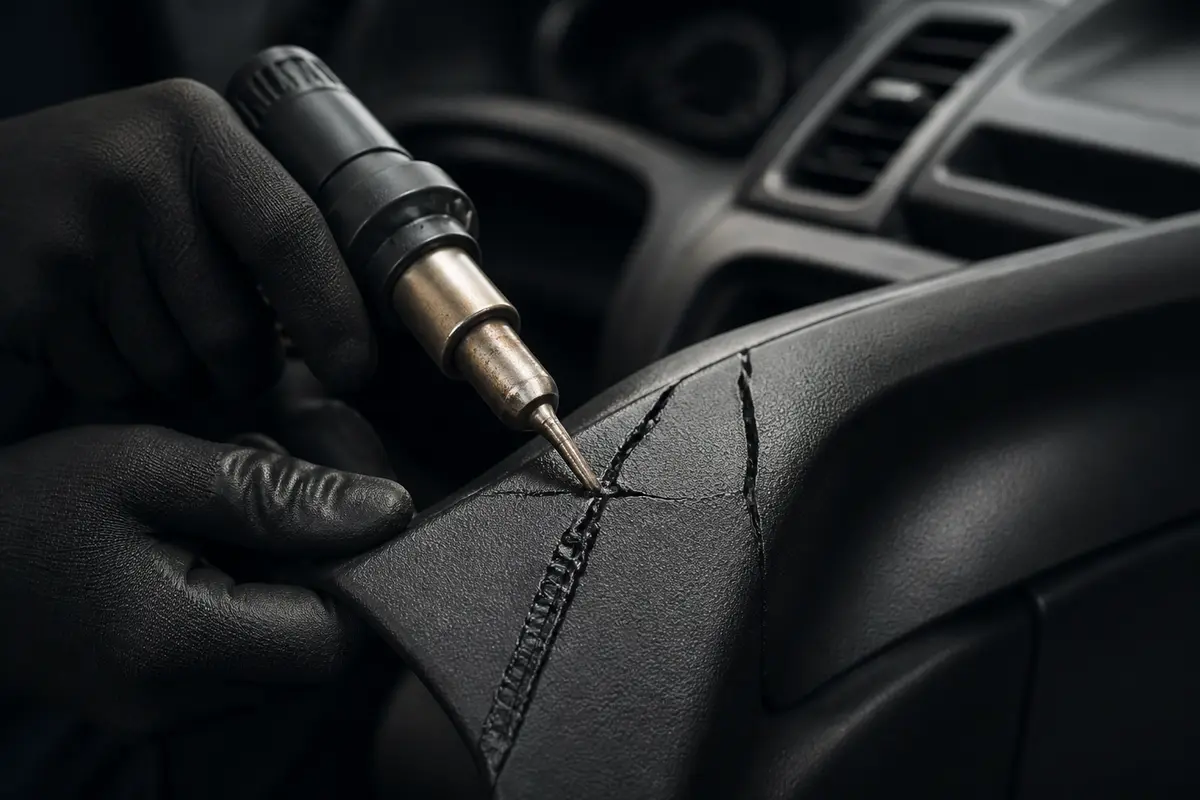
To carry out an ABS restoration project, you will need several essential tools and materials. First, an automotive soldering iron is crucial as it provides the necessary heat to fuse the plastic. You will also need ABS plastic welding rods, which are used to fill cracks and joints in the material. Additionally, you will need fine sandpaper to prepare the surface, and you might want a cleaner to remove any residue. Be sure to work in a well-ventilated area, as plastic fumes can be toxic. Once you have everything ready, you’ll be set to start the restoration process.
ABS Plastic Welding Process
The plastic welding process begins with preparing the surface to be repaired. Clean the area of any dirt or grease and lightly sand the edges of the crack to enhance adhesion. Then, heat the soldering iron to the appropriate temperature and start applying heat to the crack, slowly integrating the ABS plastic welding rod while fusing the edges of the material. This may require patience as it is crucial not to overheat or underestimate the fusion time. Once the bond has cooled, gently sand the surface to make it smooth and even. This step is crucial to avoid highlighting the repaired area. Afterwards, you can apply a sealant or paint if desired for a more aesthetic finish.
Common Mistakes and Best Practices
When performing plastic welding, there are several common mistakes that beginners often make. One is not properly cleaning the surface, which can lead to poor adhesion. Another common mistake is overheating the material, which can weaken the repair or even burn the plastic. To avoid these issues, always ensure to work slowly and carefully. Additionally, it’s recommended to practice on scrap pieces before performing welding on visible or more critical parts. Make sure to let the area dry well after the repair before using the vehicle to prevent any failure.
Conclusion
Plastic welding in vehicle interiors, especially in ABS plastics, is accessible to anyone looking to improve their car’s appearance. With the right tools and a bit of patience, you can fix those damages without the need for costly repairs. Remember to prepare well, follow the welding steps, and avoid common mistakes. Start your project and transform your vehicle’s interior!
Keywords: soldadura de plastico, ABS, restauracion tablero, cautin automotriz
Views: 14