Did you know that a small voltage drop can lead to electrical system failures in your vehicle? Many automotive issues, from sensor malfunctions to complex breakdowns, can be linked to voltage drops that aren’t always obvious. In this article, we’ll teach you how to use an automotive multimeter to effectively diagnose these problems, ensuring your vehicle operates correctly and safely.
Understanding Voltage Drops in Automotive Sensors
Voltage drops occur when there is a loss of power along a circuit. This can be caused by loose connections, damaged wires, or malfunctioning sensors. In modern vehicles, sensors are critical for engine management, emissions control, and many other functional systems. Early diagnosis of these drops can prevent greater damage and costly repairs. A multimeter is an essential tool for measuring voltages and detecting issues in the sensor system. Make sure to familiarize yourself with the multimeter and understand how to interpret its readings.
Using the Automotive Multimeter for Diagnosis
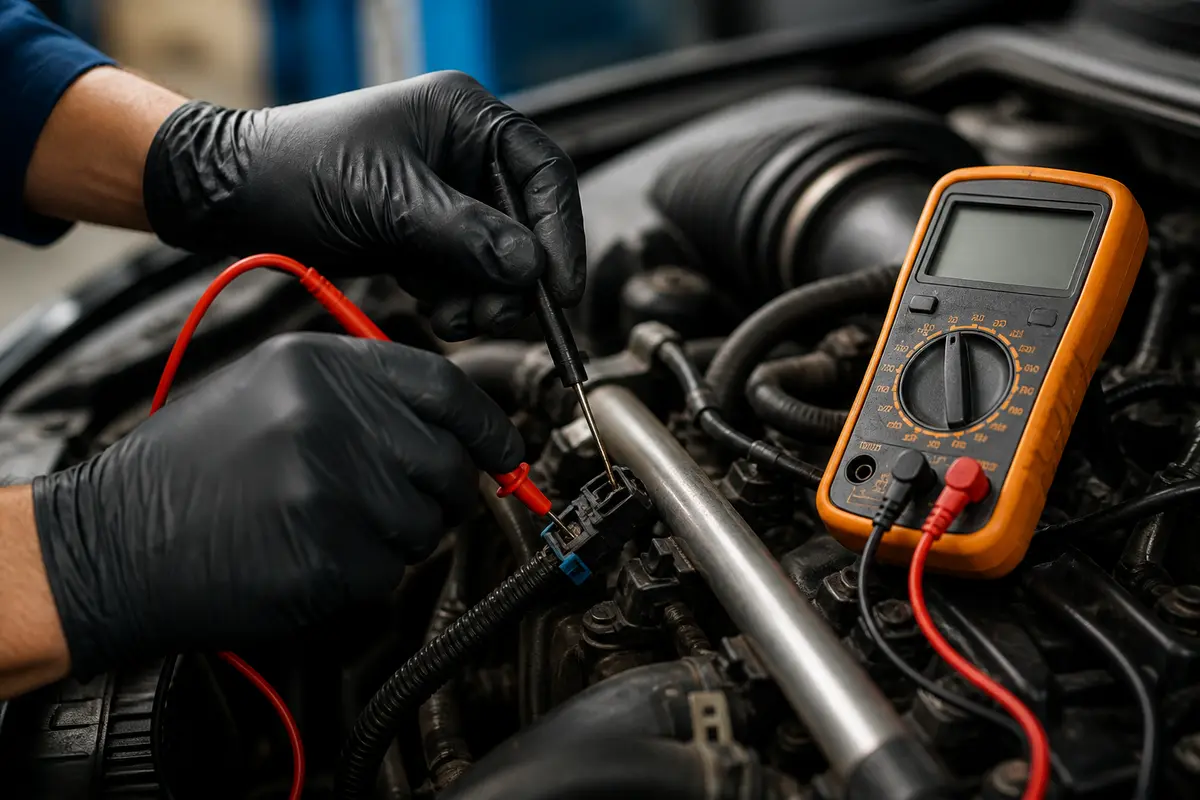
To begin your diagnosis, it’s essential to establish a standardized measurement method. Start by turning off the vehicle and allowing the system to cool down. Then, set your automotive multimeter to voltage mode and test the connections of the sensors. Look for voltage readings at the connector of each sensor. A reading below the manufacturer’s specification indicates a voltage drop. Additionally, check the chassis grounds, as a poor ground connection can result in voltage fluctuations. Measure with the vehicle off and then again with it on to compare results, as this will provide you with valuable information about the overall system condition.
Common Mistakes to Avoid During Diagnosis
Often, novice technicians make mistakes that can lead to incorrect diagnoses. One common mistake is failing to properly check the chassis ground; a poor ground connection can mask voltage-related issues. Another mistake is not considering the resistance in the circuit, which can cause voltage drops that may not be detected by measuring only at the sensor terminal. Also, remember to disconnect the battery before taking measurements on high-power circuits to avoid damaging the multimeter. Conducting these checks methodically will help ensure accurate results and avoid unnecessary confusion.
Best Practices for Effective Diagnosis
For optimal results, follow a systematic approach during diagnosis. Start with a visual inspection of wires and connectors for damage. Measure at key points in the circuit and document your readings. It’s advisable to create a chart that relates each sensor to its corresponding voltage. This will not only allow you to identify voltage drops, but also help you understand the system’s behavior as a whole. If you detect issues, prioritize correcting connections before replacing sensors, as often the root of the problem lies in the wiring or inadequate connections.
At the end of the diagnosis, recheck all sensors and test the system’s functionality before closing up the vehicle. With perseverance and attention to detail, you’ll be able to effectively diagnose any voltage-related issues in automotive sensors.
In conclusion, accurately identifying voltage drops using an automotive multimeter is essential for ensuring your vehicle’s efficient performance. With the right techniques and practices, you can tackle electrical challenges. Always remember to check the chassis grounds and follow standard procedures for the best results.
Keywords: caida de voltaje, multimetro automotriz, tierras de chasis, diagnostico arnes
Views: 21