The Evolution of Ultra Fast Charging
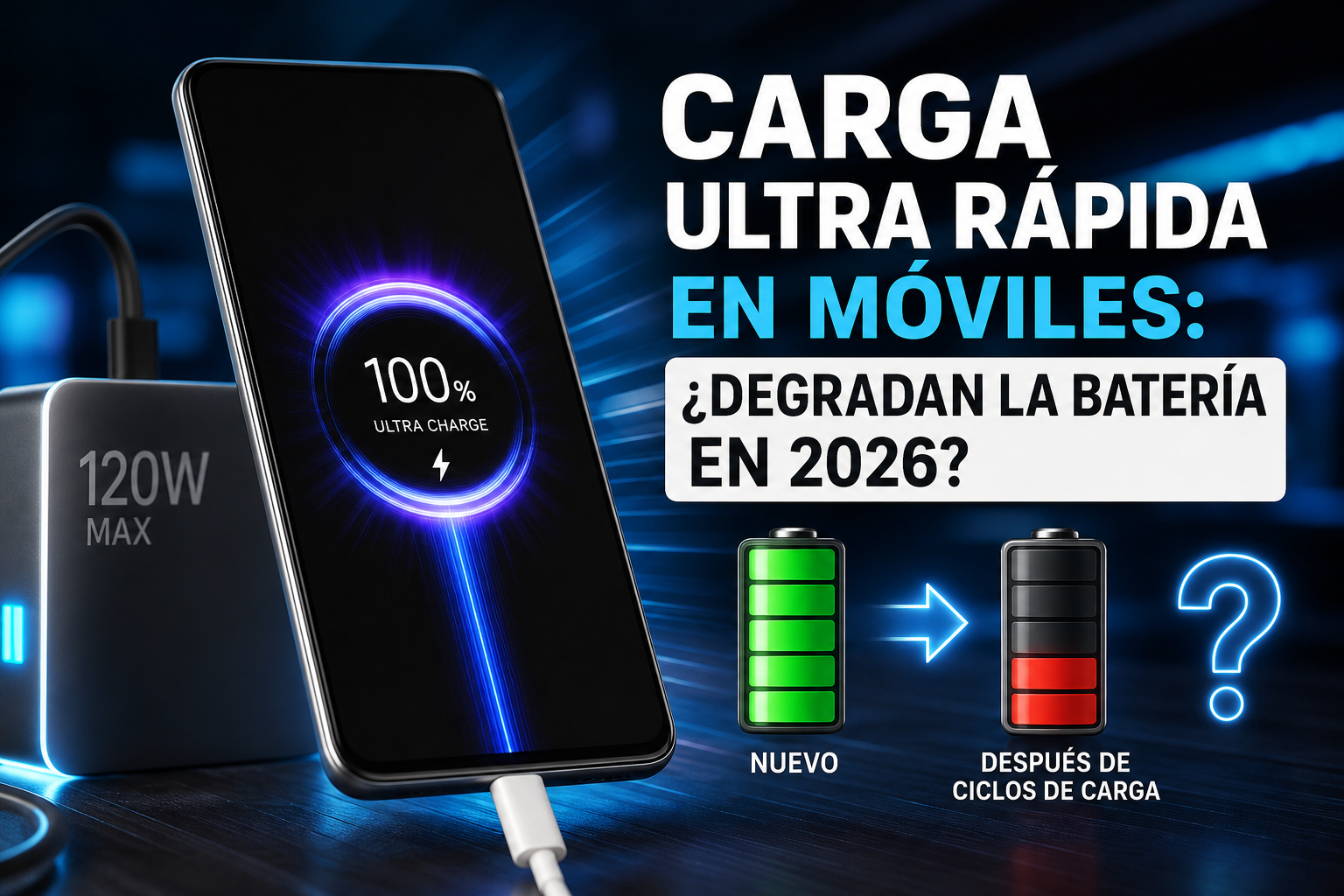
Since the introduction of ultra fast charging, users have enjoyed the convenience of powering their devices in mere minutes. However, a critical question arises: do these technologies truly extend our batteries’ lifespans, or do they harm them in the long run?
Charge Cycles and Their Impact on the Battery
The durability of a lithium battery, common in mobile devices, is measured in charge cycles. Each time you recharge your mobile from a low percentage to 100%, you consume one cycle. Ultra fast charging, which often raises the battery’s temperature during the process, could accelerate the degradation of the electrode and affect its characteristics.
The Role of Gallium Nitride (GaN)
Gallium nitride (GaN) has revolutionized charger design by enabling greater efficiency in energy conversion. Its ability to handle high voltages with less energy loss helps reduce heat during charging. However, the impacts of temperature on battery health are still not fully understood, raising questions about the use of GaN in all devices.
Best Practices to Extend Battery Life
- Avoid Heat: Keep your device in a cool environment while charging.
- Don’t Overcharge: Disconnect once it reaches 100%.
- Use Quality Chargers: Opt for chargers employing GaN technology for lower heat.
Conclusion
As we approach 2026, ultra fast charging technologies offer undeniable benefits, but it is crucial to be aware of how they can affect battery health. Applying best practices can help mitigate risks and prolong the lifespan of our batteries.
Keywords: Ciclos de carga, nitruro de galio (GaN), mAh
Views: 42