Voltage drops in automotive electrical harnesses can lead to performance issues and system failures. Accurate diagnosis is crucial to avoid costly repairs and ensure proper vehicle functionality. In this article, we will explore specific tools and techniques, including the use of a multimeter, to identify and resolve issues with contact resistance, grounding, and parasitic draw.
Understanding Voltage Drops in Electrical Harnesses
Voltage drops are energy losses that occur when electrical current passes through a conductor. In automotive electrical harnesses, these drops can indicate high contact resistance, a common problem caused by loose connections or corrosion. When voltage drops in a power line, components may not receive the necessary energy to operate correctly, leading to intermittent or permanent failures in the system.
To accurately diagnose the issue, it’s essential to understand how current flows in the harness. Measuring voltage drop across different points in the harness helps identify problematic areas. A multimeter becomes a key tool in this process as it provides accurate readings of voltage, current, and resistance, facilitating fault identification.
Using the Multimeter for Diagnosis
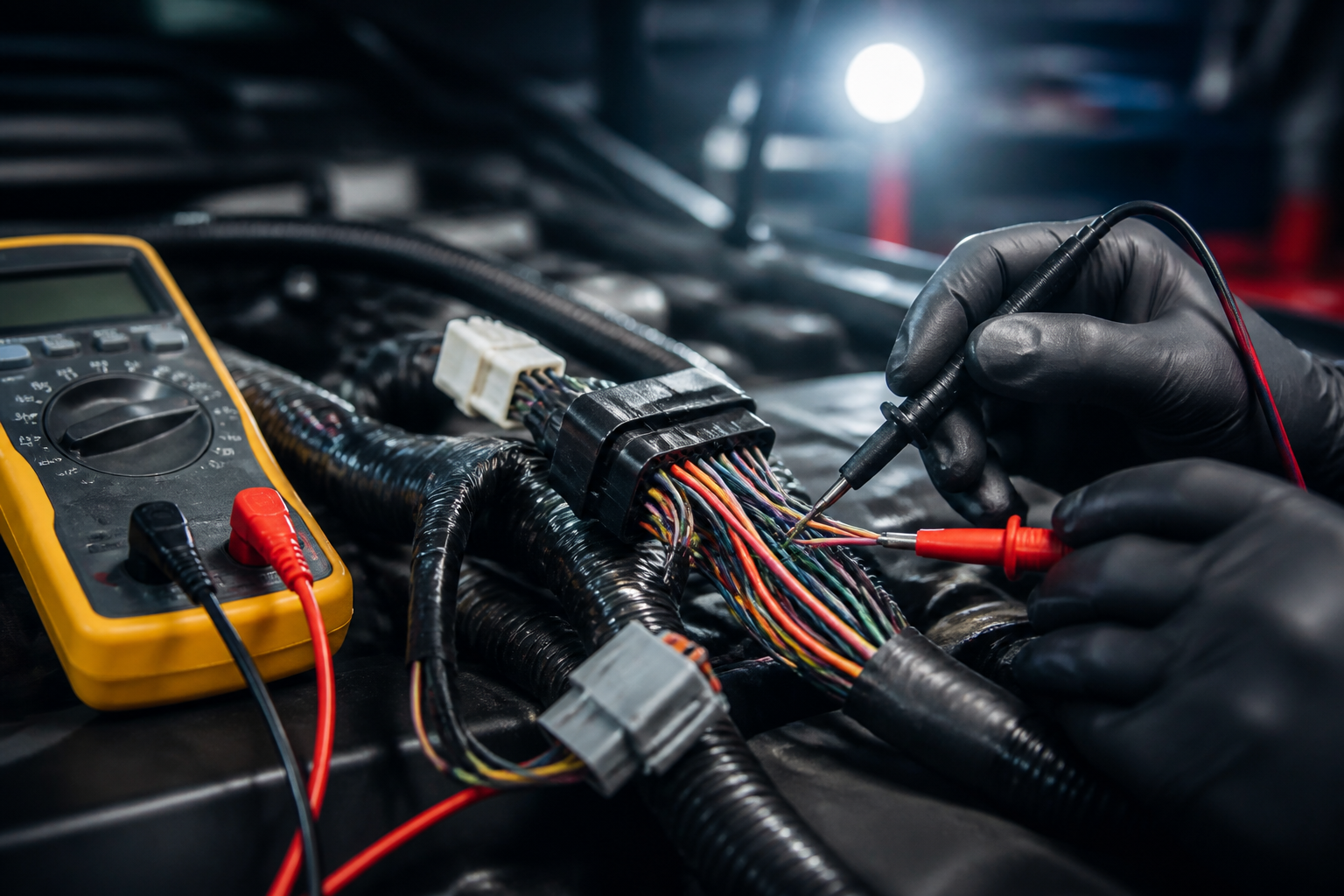
The multimeter is an indispensable tool for diagnosing automotive electrical systems. To measure voltage drops, it’s recommended to perform a series of tests with the multimeter at various sections of the harness. First, set the multimeter to voltage mode. Then, connect the test leads to both ends of the component or harness section you want to measure.
Performing these measurements under load is important, as this will show more realistic voltages. If the voltage reading is significantly lower than expected, a voltage drop is occurring. The next task will be to measure contact resistance in the connectors since high resistance here can be the cause of the problem.
Identifying Ground Issues
Grounding issues are another common cause of voltage drops in vehicles. Poor contact in the grounding system can result in increased resistance in the return path to the battery. To diagnose these issues, it’s advisable to check all grounding connection points in the harness. Use the multimeter to measure resistance between the ground point and the vehicle chassis.
Readings exceeding 0.1 ohms could indicate a problem in the ground connection. Be sure to clean and tighten connections to ensure a solid contact. If readings do not improve after performing these actions, you may need to consider replacing the involved wiring.
Parasitic Draw and Its Effects
Parasitic draw occurs when electrical components continue to draw power from the battery even when the vehicle is off. This can contribute to voltage drops, especially if the battery is draining and cannot provide adequate voltage to other components. To identify and resolve parasitic draw issues, it’s crucial to measure the current drawn by components.
Set the multimeter to ammeter mode and connect its leads in series with the battery. Determine the normal draw and check for components drawing excessive current. A value over 50 mA may indicate a fault. In this case, check the integrity of the circuit and locate the offending component.
Common Mistakes and Best Practices
One of the most common mistakes when diagnosing voltage drops is failing to perform measurements under load. This can lead to misinterpretations as voltages may appear normal when unloaded. Another frequent error is not checking connectors and wiring for possible corrosion or physical damage.
Best practices include regularly cleaning connections and using specific lubricants to prevent corrosion. Additionally, it’s crucial to conduct periodic diagnostics on the vehicle’s electrical system to catch issues before they escalate into significant failures. Keeping a log of voltage and resistance readings can help identify patterns that indicate impending problems.
In conclusion, proper diagnosis of voltage drops in automotive electrical harnesses can prevent severe and costly problems. Using a multimeter to measure contact resistance, check grounding, and evaluate parasitic draw provides a solid foundation for any mechanic. Always remember to perform diagnostics under load and maintain regular upkeep on your electrical connections to ensure optimal vehicle performance.
Keywords: Multímetro, resistencia de contacto, tierras, consumo parásito
Views: 10