
Optimizing engine performance heavily relies on the proper function of its electrical components, especially ignition coils. Ignition failures can cause severe issues, such as the notorious ‘misfire cylinder’, affecting the engine’s efficiency and health. This article delves into how to identify these problems, focusing on ignition timing and reverse spark for accurate diagnostics, ensuring your vehicle runs optimally.
Understanding Ignition Order
The ignition order is critical for smooth engine operation. It refers to the specific sequence in which each cylinder is activated. An incorrect ignition order can result in timing errors, causing misfires in one or more cylinders. To diagnose these issues, it is essential to review the manufacturer’s manuals, which detail the exact ignition order specific to each model. Verifying that each cylinder receives the corresponding coil signal at the right moment is a vital step in diagnosing ignition problems.
How to Verify Ignition Order?
- Check the ignition diagram in the user manual.
- Perform a cold ignition test to observe each cylinder’s behavior.
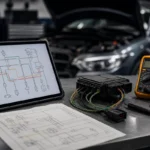
- Use an oscilloscope to analyze coil signals in real time.
Packed Coil: The Heart of Ignition
Ignition coils, specifically packed coils, are indispensable components in the ignition system. Their role is to convert the battery’s low voltage into the high voltage needed to create a spark. If a coil fails, it can lead to a misfire in the associated cylinder. Common symptoms of a defective coil include loss of power, increased fuel consumption, and intermittent failures that are challenging to diagnose without the right tools.
Identifying Ignition Coil Failures
- Visually inspect for signs of physical damage, such as cracking or corrosion.
- Use a multimeter to measure the coil’s resistance.
- Conduct load tests to check if the coil can maintain the necessary voltage under pressure.
Reverse Spark: A Critical Symptom
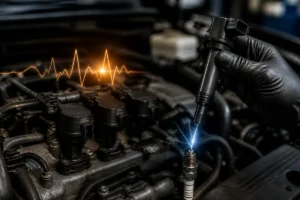
The ‘reverse spark’ phenomenon refers to the occurrence where the spark does not generate at the correct moment, resulting in inefficient combustion. This issue can arise due to a malfunctioning coil, an issue with the ignition module, or a misalignment in the crankshaft position sensor. To diagnose it correctly, observing the spark pattern in each cylinder using a spark tester during engine starting is crucial.
Diagnosing Reverse Spark
- Conduct repeated spark tests while the engine is running.
- Analyze the timing of the spark with an oscilloscope, ensuring its synchronization.
- Check the sensors that may affect signal sending to the coils.
Common Mistakes in Diagnosing Ignition Failures
One of the most frequent errors is failing to properly check the ignition order. Many technicians overlook the simple fact that a well-installed coil can fail if connected to the wrong cylinder. Another common mistake is assuming that coils are always the cause of a misfire without inspecting other components such as spark plugs and sensors. Lack of appropriate tools for diagnosis can lead to incorrect conclusions and unnecessary repairs.
Best Practices for Diagnosis
- Use appropriate tools, such as diagnostic scanners and oscilloscopes, for more precise analysis.
- Don’t ignore other components that may affect ignition function.
- Perform a thorough and detailed diagnosis before proceeding to replace any component.
Conclusion
Identifying failures in ignition timing and ignition coils is not just about changing parts; it requires a systematic approach and appropriate diagnostic techniques. By following these steps and tips, you can optimize engine performance and prevent long-term problems. Always remember to verify the ignition order and the condition of the coils to ensure effective sparking.
Keywords: orden de encendido, bobina de paquete, chispa invertida, misfire cilindro
Views: 15