In a world where sustainable agriculture is becoming increasingly crucial, autonomous environmental monitoring stands out as an innovative solution. Utilizing LoRa technology, farmers can implement ultra-low-power nodes that optimize resource usage. The combination of agricultural sensors and long-range communication modules allows for the collection of vital data without compromising energy efficiency. But how can one design a node that operates on solar energy while maintaining minimal consumption? Let’s explore this topic in depth.
Understanding LoRa Technology
LoRa (Long Range) technology is a communication link utilizing spread spectrum modulations. This allows data to be transmitted over long distances with reduced energy consumption, making it ideal for applications in remote environments. In agriculture, agricultural sensors measure variables such as soil moisture, temperature, and salinity, transmitting data to real-time analysis platforms thanks to LoRa. This technology provides extensive coverage with low latency, favoring continuous data reception from distributed nodes.
Designing Low-Power Nodes
The design of a LoRaWAN node begins with the selection of appropriate components. A low-power microcontroller, such as the ESP32 or STM32, should be capable of entering deep sleep modes to conserve energy between transmissions. Including a DC-DC converter to manage solar energy is essential, along with a good voltage regulator to maintain a stable output. The choice of sensors also impacts energy consumption; for instance, low-voltage operating humidity and temperature sensors can help optimize system efficiency.
Integrating Solar Energy
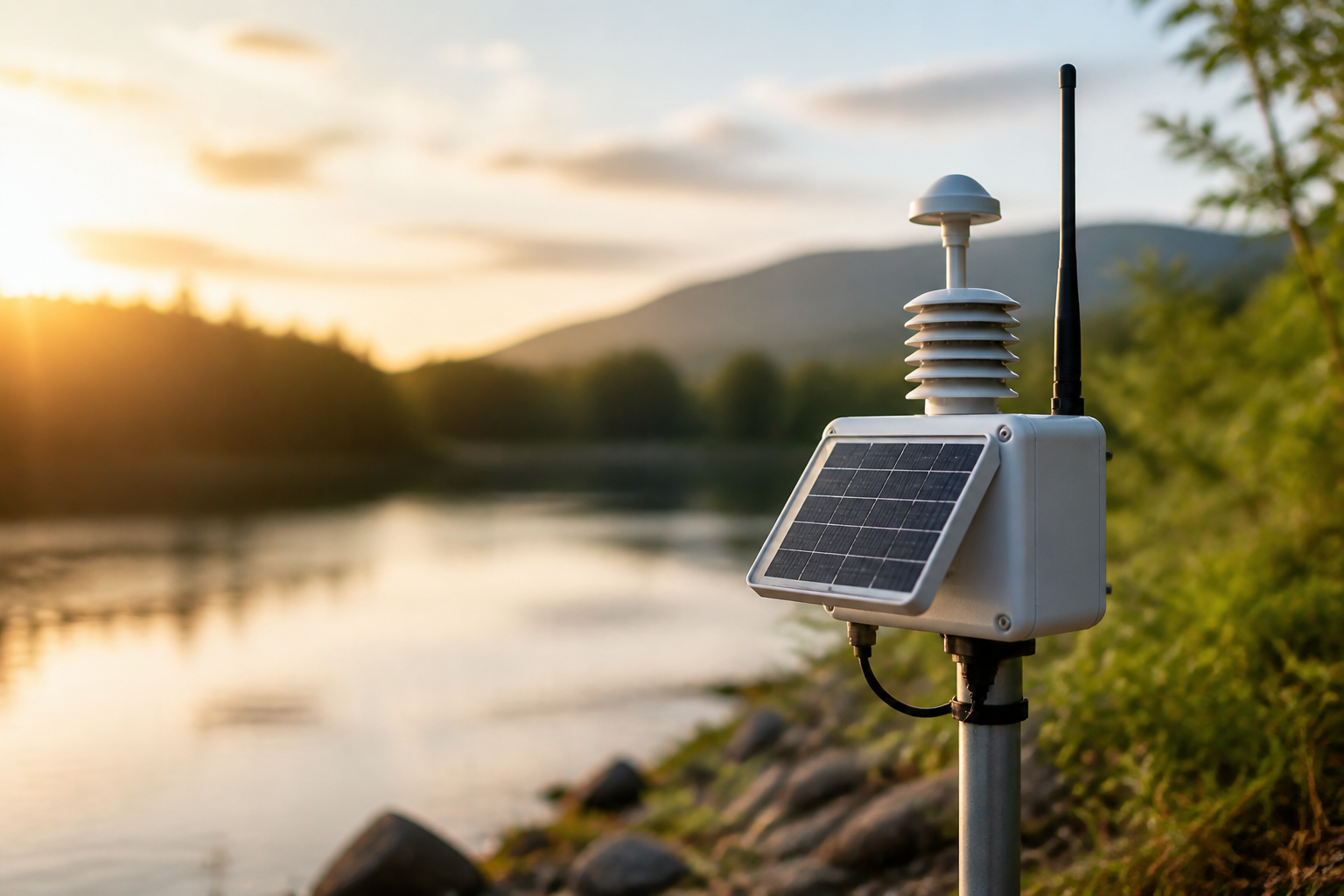
Integrating solar energy not only amplifies the sustainability of the project but also ensures that nodes can operate continuously. A small-sized solar panel combined with a battery management system allows for efficient recharging of lithium polymer or lithium-ion batteries. During the day, the panels produce energy, while the management system uses that energy to charge the battery and keep the node running. Moreover, it is crucial to properly size the panel to avoid energy shortages during overcast periods or lower sunlight conditions, necessitating careful load and life cycle analysis.
Common Mistakes and Best Practices
When designing LoRaWAN nodes, there are several common mistakes that can compromise the system’s effectiveness. One of the most frequent is failing to consider the location of the nodes; signal obstructions can lead to data loss. Additionally, not performing energy consumption simulations can result in an inefficient design. Ensuring field testing is essential to identify failure points and adjust configurations. Lastly, documenting each step of the process facilitates reflection and learning. Implementing regular performance reviews can help anticipate maintenance needs.
Conclusion
Autonomous environmental monitoring using low-power LoRaWAN nodes is indeed a significant advance in the field of sustainable agriculture. Adopting technologies like solar energy and well-designed agricultural sensors not only optimizes resources but also contributes to a greener future. By applying these strategies and avoiding common mistakes, the system’s efficiency can be maximized. Remember, the key lies in rigorous design and constant testing to ensure optimal long-term performance.
Keywords: LoRa, sensores agrícolas, deep sleep, energía solar
Views: 9