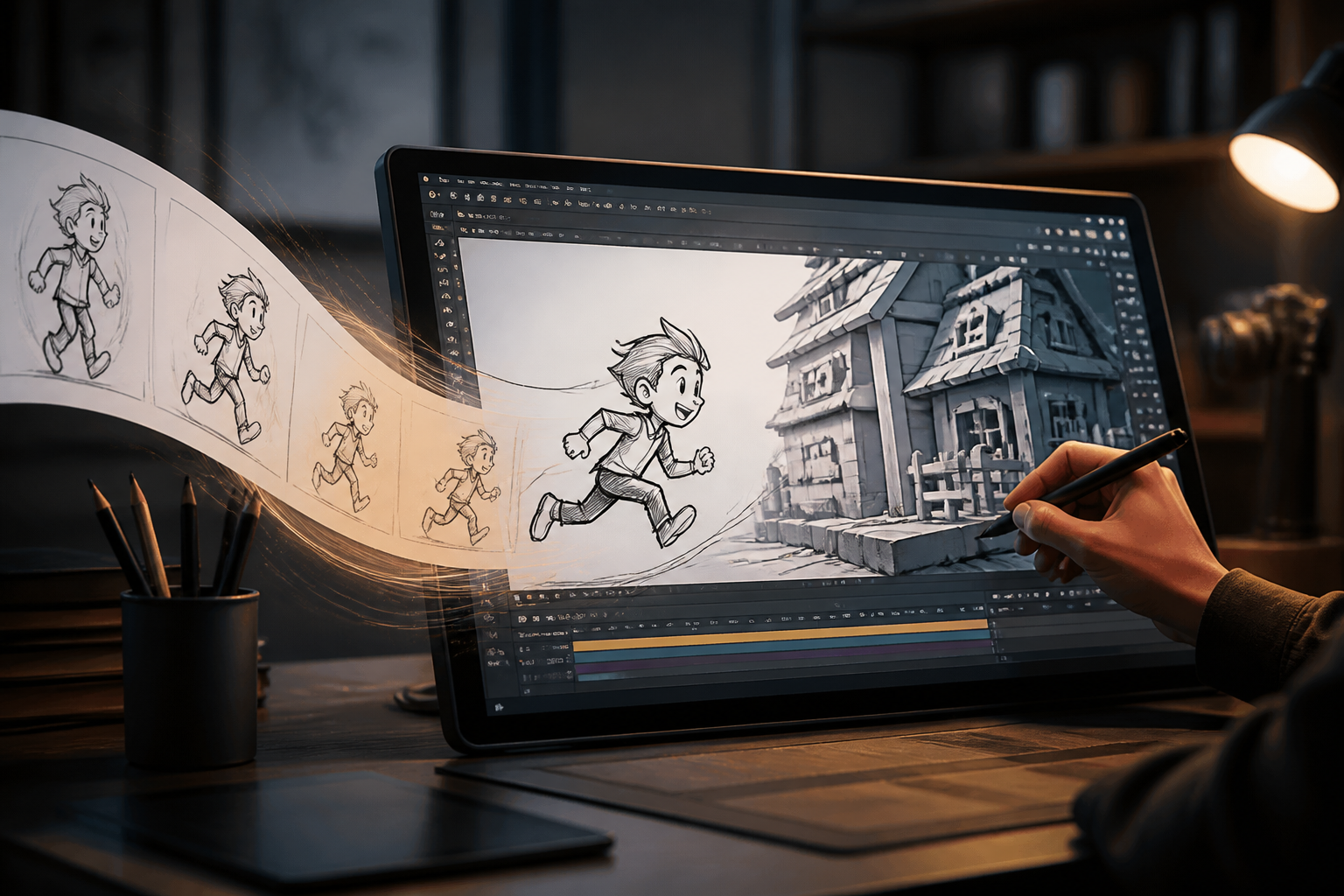
The integration of 2D and 3D animation techniques has revolutionized digital art, with Blender’s Grease Pencil leading this change. This tool not only redefines how animation is produced but also blurs the lines between traditional art and digital capabilities. In a world where modern production demands flexibility and creativity, the innovation of Grease Pencil stands as a key asset for animators aiming to excel in the digital pipeline.
The Evolution of CGI 2D and Its Importance
Since its inception, CGI 2D has been crucial for the development of digital animation, allowing artists to effectively express their ideas. However, many animation programs fell short with the limitations of traditional 2D. As technology advanced, tools like Grease Pencil emerged to offer a hybrid of 2D and 3D animation. This tool allows for creating strokes and lines akin to traditional animation while integrating them into 3D worlds. This changes the game, enabling animators to craft more dynamic and visually appealing productions, thus revolutionizing the concept of hybrid animation.
How Grease Pencil Transforms the Digital Workflow
Grease Pencil has gained popularity due to its ability to optimize the digital pipeline. Its implementation in Blender means artists can perform drawings and animations directly in 3D space. This enables production teams to work more efficiently and facilitates collaboration among artists who may be located in different parts of the world. Moreover, by offering the ability to combine different animation techniques, Grease Pencil reduces production stages, thus speeding up project delivery times. Undoubtedly, its flexibility has translated into popular productions that utilize this innovative approach.
Common Mistakes in Animation with Grease Pencil
Despite its potential, many animators fall prey to common mistakes when using Grease Pencil. One of the most frequent is underestimating the importance of planning. Animation requires a coherent and well-structured flow, and lacking a clear storyboard can lead to disorder and confusion. Another common mistake is failing to adequately familiarize oneself with Blender’s tools. Each Grease Pencil function has a specific purpose, and proper usage is crucial to maximize animation quality. Finally, it’s essential not to neglect lighting and visual effects, as these complement and enhance the animation, creating a more professional product.
Future Perspectives of Digital Animation
Looking ahead, digital animation will continue to evolve, and tools like Grease Pencil will be foundational to this journey. With a rising demand for visually appealing content across various platforms, modern production will have to adapt constantly. Additionally, advances in artificial intelligence and machine learning may integrate with 2D animation tools, further optimizing workflows. Animators who embrace and hone their use of Grease Pencil will be at an advantage, ready to capitalize on opportunities that arise with each technological advancement in the world of digital art.
In conclusion, Grease Pencil has radically changed the vision of 2D animation in Blender, providing artists with a space where creativity and technology converge. The key to successful work lies in planning and experimentation while always maintaining an open mindset to the changes and evolutions of the medium.
Keywords: Hybrid animation, pipeline digital, CGI 2D, producción moderna
Views: 3