Introduction
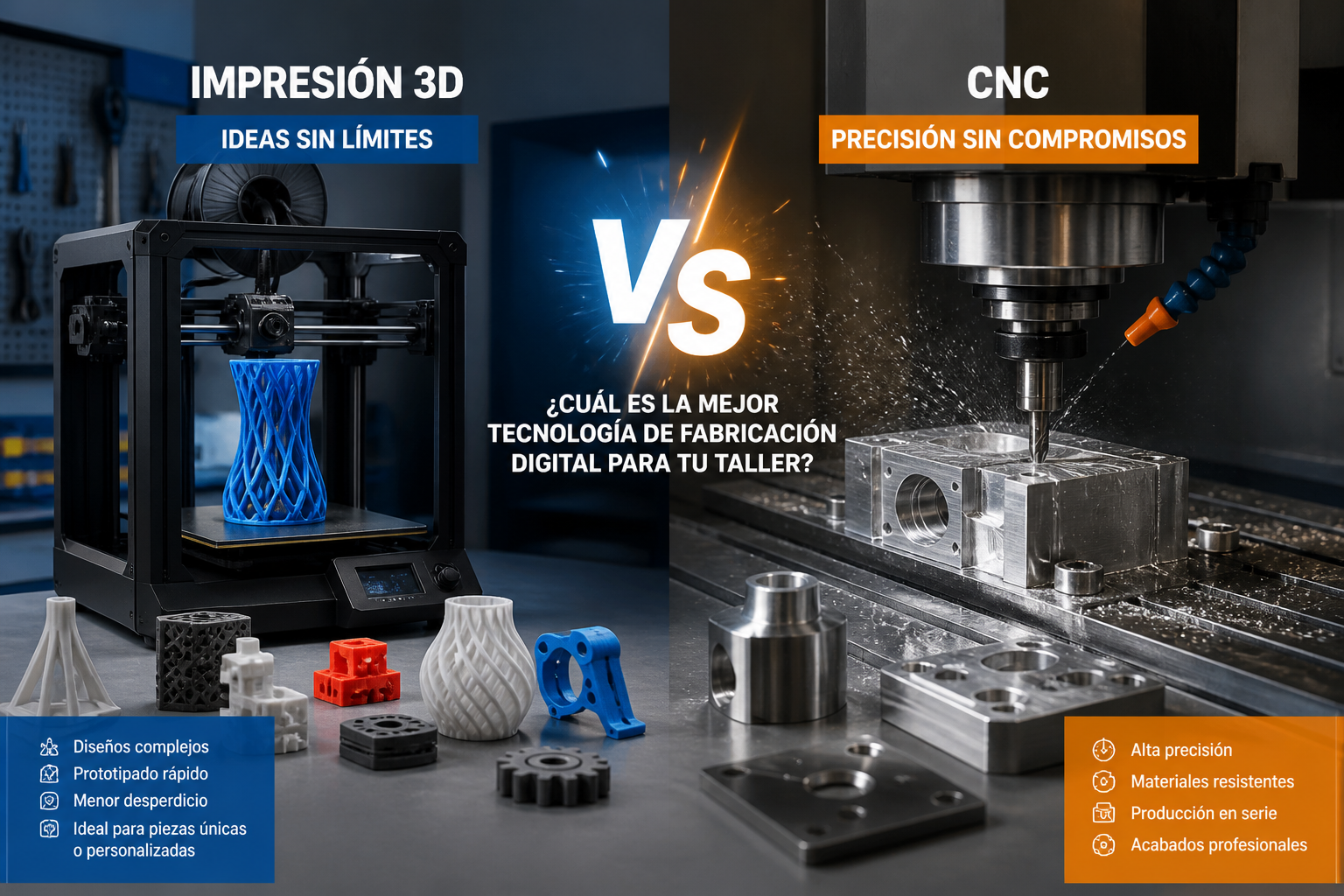
If you’ve ever wondered which digital manufacturing technology is best for your workshop, it’s time to dive into the comparison between 3D printing and CNC. Both techniques have their advantages and disadvantages and, depending on your needs, can offer unique solutions. Have you ever thought about additive manufacturing versus subtractive manufacturing? This article explores these two methods and how they fit into different projects.
The Science Behind 3D Printing and CNC
3D Printing: Additive Manufacturing
3D printing, or additive manufacturing, builds objects layer by layer from thermoplastic materials, resins, or metals. Each layer is added precisely, allowing for the creation of complex geometries that would be difficult, if not impossible, to achieve with traditional methods. The ability to adjust tolerances and custom designs makes this technique an attractive option for rapid prototypes and unique pieces.
CNC: Subtractive Manufacturing
On the other hand, CNC manufacturing uses tools like milling machines, lathes, and lasers to remove material from a solid block, shaping it into the desired piece. This subtractive process allows for a variety of materials, including metals, woods, and plastics, and is known for its high precision and exceptional surface finishes. However, the initial costs and production time for complex pieces can be higher compared to 3D printing.
A Practical Guide to Choosing the Right Technology
When deciding between 3D printing and CNC, consider the following factors:
- Project Type: If you’re looking to create rapid prototypes and complex designs, 3D printing is ideal. For high-precision mass production, CNC is the better choice.
- Required Materials: Material availability influences your decision. Ensure that the chosen technology is compatible with the materials you plan to use.
- Costs and Budgets: Evaluate your initial and operational costs. The investment in CNC equipment tends to be higher, but it can result in lower unit costs in large-scale productions.
Common Mistakes and Best Practices
Some common pitfalls include failing to consider the appropriate tolerances in your design. Therefore, be sure to adjust your design based on the capabilities of the chosen technology. Additionally, finding a balance between quality and cost can be key to a successful project.
Conclusion
Ultimately, both 3D printing and CNC offer powerful tools for digital manufacturing. The choice depends on the nature of your project and specific requirements. Practical advice: test a small project with both technologies before deciding. This will help you understand which method better suits your expectations and needs.
Keywords: Manufactura aditiva, sustractiva, tolerancias, materiales
Views: 16