Introduction to Umami in Asian Cuisine
Did you know that umami is considered the fifth taste, alongside sweet, salty, sour, and bitter? This deep, satisfying flavor has become the heart of Asian cuisine, especially in traditional Japanese dishes. Authentic dashi, a fundamental broth in many preparations, is an excellent example of how simple ingredients can result in extraordinary culinary experiences. In this article, we’ll explore how kombu seaweed and katsuobushi contribute to this flavor profile, thanks to glutamic acid and a millennium-old fermentation process.
The Essential Ingredients
Kombu Seaweed: The Secret to Depth
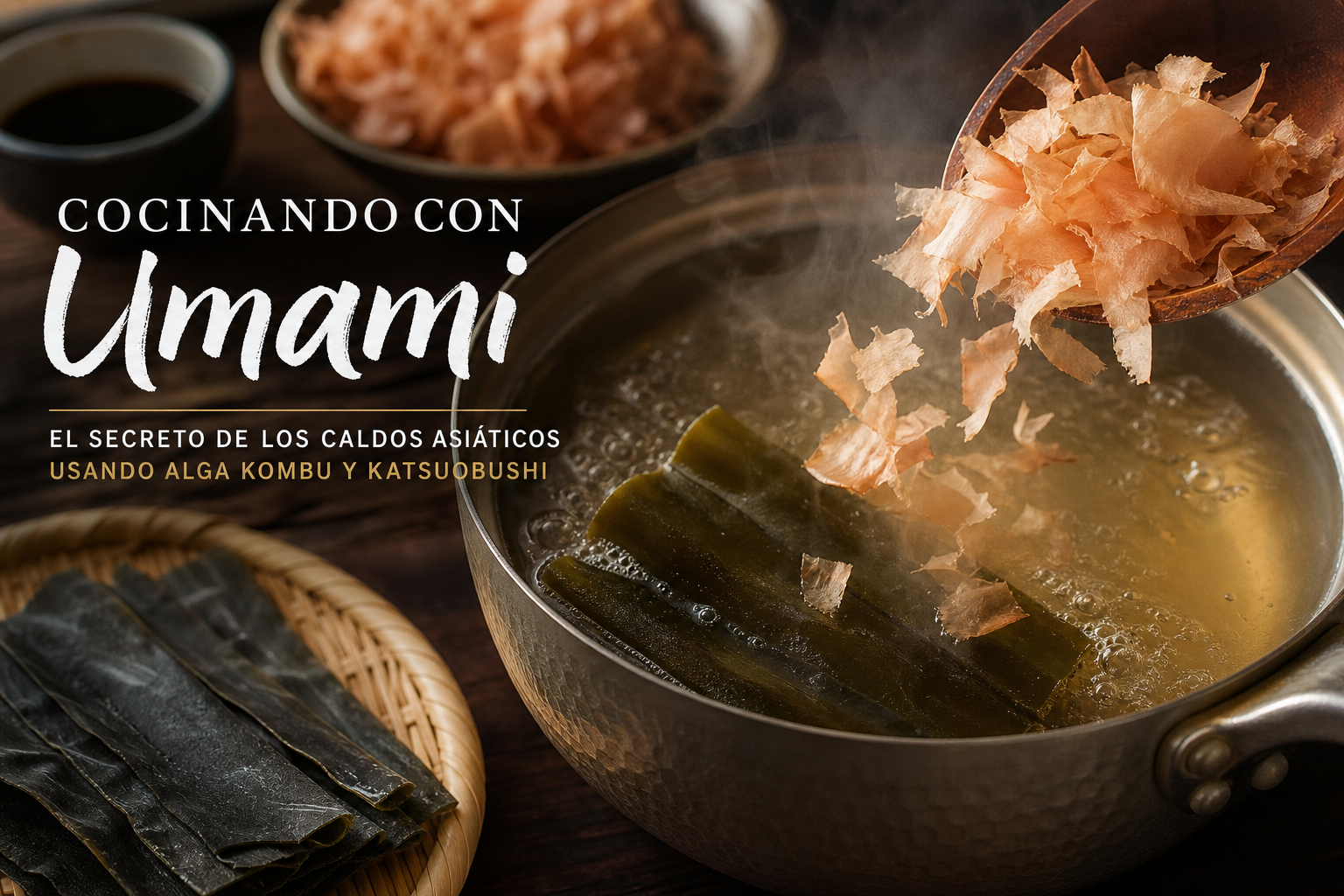
Kombu is a type of dried seaweed widely used in Japanese cuisine. It contains a high concentration of glutamic acid, an amino acid that enhances the umami flavor. By hydrating kombu in hot water, we release this compound, enriching any broth. Its role as the base for dashi provides a depth that is hard to replicate with other ingredients.
Katsuobushi: The Smoked and Fermented Flavor
Katsuobushi, or dried bonito, is another key component of dashi. This fish is smoked and fermented, which intensifies its flavors. When shaved into flakes, it is added to the broth, taking umami to another level. The combination of the flavor profiles of kombu and katsuobushi creates not only a balanced taste but also respects the tradition of Japanese cooking.
Preparing Authentic Dashi
Basic Dashi Recipe
- Ingredients: Kombu (20g), katsuobushi (30g), water (1 liter).
- Instructions:
- Soak the kombu in cold water for 30 minutes.
- Heat the water without boiling, then remove the kombu.
- Add katsuobushi and let it steep for 5-10 minutes.
- Strain the liquid and voilà! You have authentic dashi.
Common Mistakes and Best Practices
A common mistake is boiling kombu, which can result in a bitter broth. Always heat slowly and avoid boiling. Also, using quality katsuobushi is crucial; opting for fresh, natural products can make a big difference in the final result of your dashi. Remember, cooking is an art that requires patience and passion.
Conclusion
Diving into umami cooking through kombu and katsuobushi not only transforms your dishes but also connects you with the rich tradition of Japanese cuisine. By preparing your own dashi, you are creating an elixir that can elevate your recipes to new heights. Experiment and enjoy the culinary journey!
Keywords: Ácido glutámico, fermentación, dashi auténtico, Japón
Views: 27