The Fusion of Two Mediums: Manga and Anime
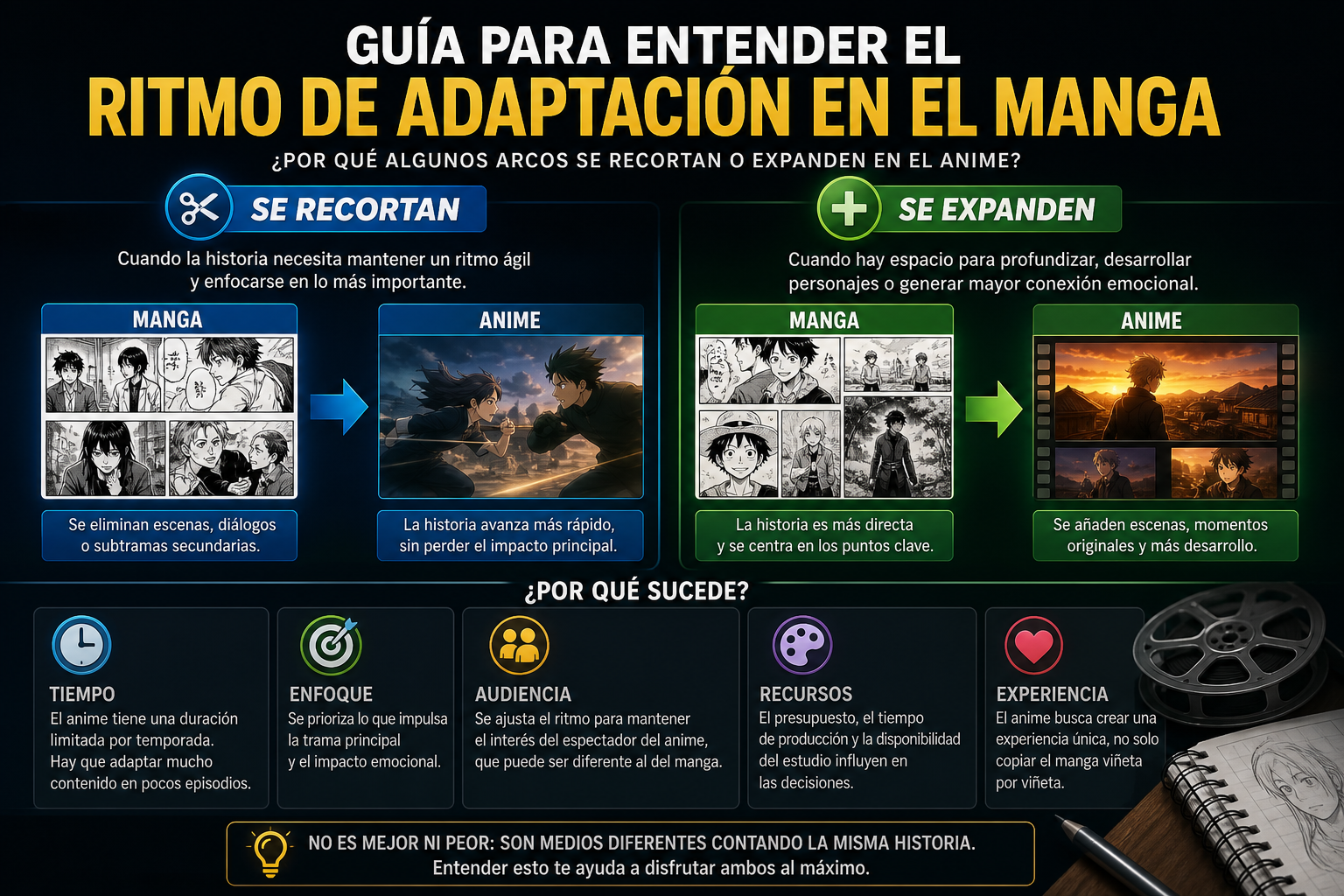
The journey from manga to its anime adaptation is a fascinating process that generates both excitement and debate. Have you ever wondered why certain arcs in your favorite series feel more drawn out or condensed on screen? The answer lies in pacing, a critical aspect that influences the viewer’s experience.
What is Pacing and How Does It Affect Narrative?
Pacing refers to the speed at which the story develops. In the context of adapting a manga into an anime, the adapted script plays a pivotal role. Often, directors and scriptwriters must decide how to balance plotlines with the anime’s timeline, sometimes shortening arcs or introducing original content.
- Filler: This term is used to describe episodes not found in the original manga. They are included to prevent excessive divergence between the anime and manga, although they are often criticized for not contributing to the main storyline.
- Storyboard: Storyboard artists must visualize how each panel of the manga translates into motion. This phase is essential for maintaining fidelity to the author and their narrative style.
Practical Example: ‘Naruto’ vs ‘Naruto Shippuden’
In ‘Naruto’, the anime included multiple filler episodes that unnecessarily stretched the narrative. In its continuation, ‘Naruto Shippuden’, the creators opted for a more harmonious blend between the original material and filler episodes, achieving a more appropriate pacing that captured viewer attention.
Beginner Mistakes in Adaptation
One of the biggest mistakes in adaptation is drastic changes to the story’s pacing. This can lead to confusion and disconnect among fans. Some aspects to avoid include:
- Modifying character development without a clear justification.
- Adding or removing scenes critical to the storyline arc.
- Consequences on the timing of events that can disorient the audience.
Conclusion: Keys to a Successful Adaptation
To achieve a successful adaptation, it is essential that creators respect the original material while balancing the need for expansions or necessary cuts. A good piece of advice is to always consult audience feedback and align with the original author’s vision. This will not only enable a faithful adaptation but also provide a rich experience for both new viewers and long-time fans.
Keywords: Guion adaptado, storyboard, relleno, pacing, fidelidad al autor
Views: 36