Can you imagine baking bread with such intense flavor that it transports you to the heart of a traditional bakery? Natural fermentation is key to achieving this. Making sourdough at home is not just a creative process but also a way to connect with the essence of artisanal baking. In this beginner’s guide, you will discover how to create and maintain your homemade starter, harnessing the magic of wild yeast and the unique aromas produced during fermentation.
What is sourdough and its importance
Sourdough is a culture of yeasts and bacteria used as a leavening agent in baking. Unlike commercial yeast, which is a single species, sourdough is made up of various strains of wild yeast and lactic bacteria. This diversity not only provides better flavors but also a slower and more controlled fermentation process, which can radically change the texture and crust of your bread. The importance of natural fermentation lies in its ability to break down sugars and improve the digestibility of bread, a process that has been utilized for centuries by bakers worldwide.
Ingredients and materials needed
To start your sourdough journey, you’ll need a few simple ingredients: flour, water, and a glass jar. It’s advisable to use whole grain or rye flour since these flours contain more nutrients that promote the growth of microorganisms. The water should be filtered or boiled to remove chlorine, which can interfere with fermentation. Additionally, ensure you have a scale to measure the precise amount of ingredients and a wooden or plastic spatula for mixing. This balance of ingredients will focus on a hydration percentage of about 100%, meaning the weight of water will equal that of the flour.
Creating and maintaining the starter
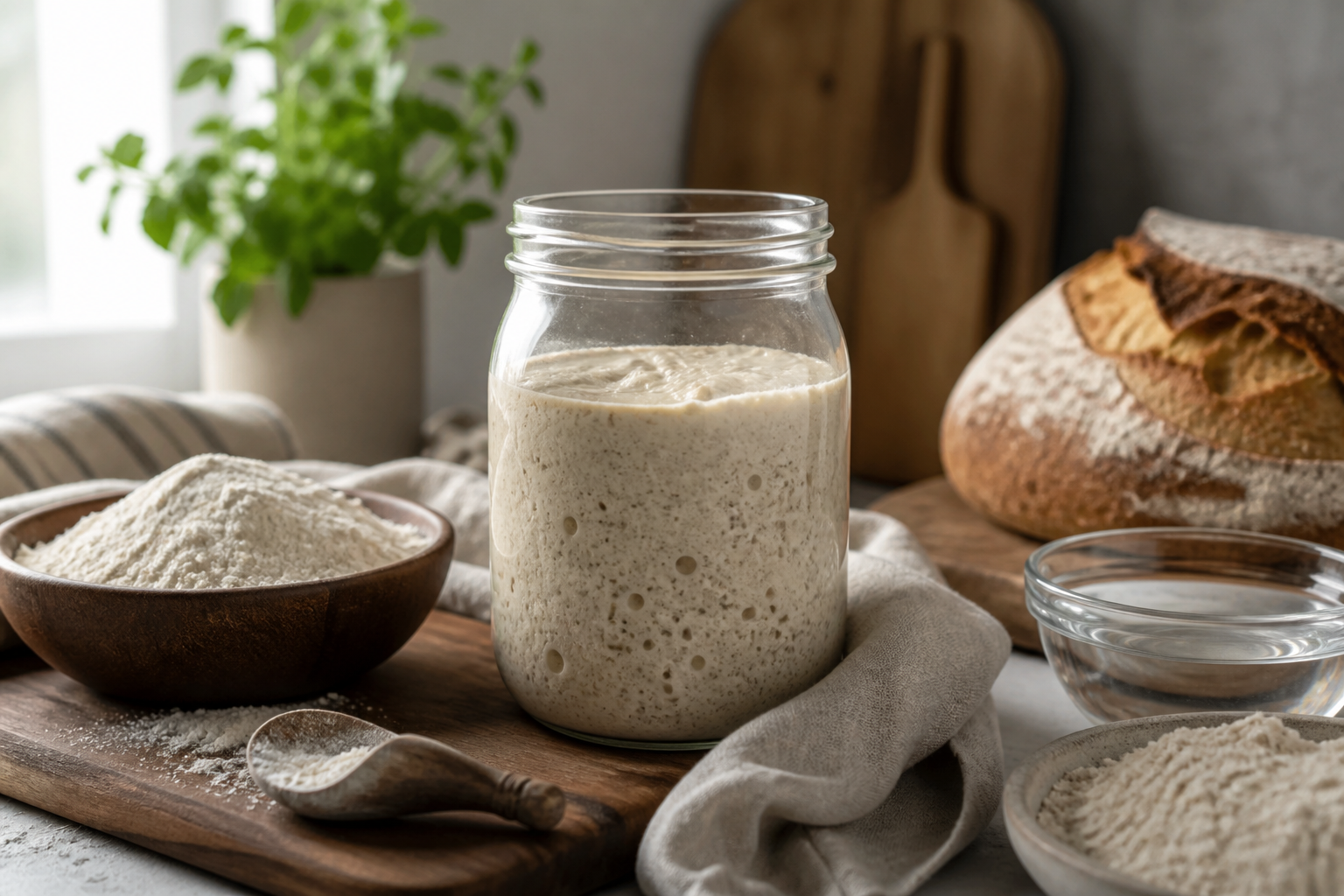
To create your sourdough starter, mix equal parts of flour and water (for example, 100g of flour and 100g of water) in a glass jar. Stir well and cover the jar with a clean cloth to allow air in while avoiding contamination. Let the mixture rest at room temperature for 24 hours. After this, you can begin feeding your starter daily or every other day by removing half and adding the same amount of flour and water. As your culture grows, you should notice bubbles in the mixture, a sign that the yeasts are at work. This can take anywhere from 5 to 14 days, though some cultures may take longer depending on environmental conditions.
Beginner’s mistake: What to avoid when making sourdough
A common mistake among those starting with sourdough is not being consistent with the feeding process. Neglecting to feed your starter can lead to its deterioration and, in the worst-case scenario, to the death of your culture. Another mistake is using tap water without filtering, which can harm the yeasts. You should also avoid storing your starter in a cold place or in an airtight container. Natural fermentation needs air and a warm environment to thrive. Make sure to maintain the right temperature and observe bubbling activity as an indicator that everything is going well.
Final tips for success
Once your sourdough is ready, you can use it to make bread, pizza, and other baked goods. Remember that practice is key; each culture is unique, and what works for one may not work for another. Don’t hesitate to experiment with different flours and hydrations to find your perfect combination. A practical tip: try the ‘float test’ to see if your starter is ready to use. Just take a teaspoon of the starter and place it in a glass of water; if it floats, it’s ready to bake. Enjoy the wonderful world of artisanal baking!
Keywords: Fermentación natural, levadura silvestre, hidratación, corteza
Views: 12