
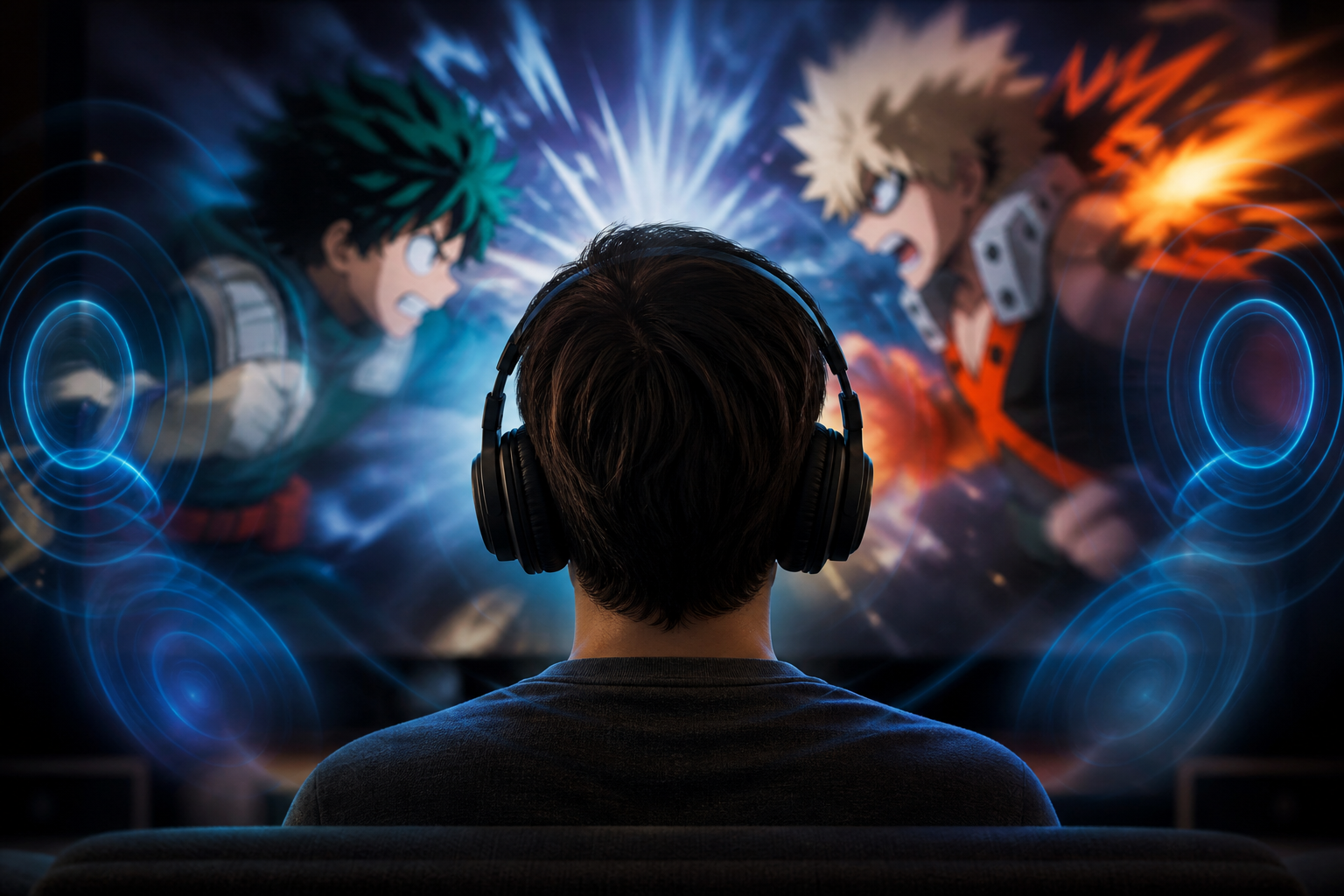
In a world where immersion is key, the evolution of 3D and binaural audio in anime redefines how we experience combat scenes. Have you ever wondered how a simple sound can transport you to a virtual battlefield? Sound mixing has become an art form, and headphones are the gateway to this sonic universe. In this article, we will explore the science behind these sound technologies and how they have transformed sound production in modern anime.
The Science of 3D Audio
3D audio is based on creating a three-dimensional sound space that mimics how we perceive sound in the real world. It employs techniques like convolution and phase manipulation to position sounds in an enveloping environment. In anime, this allows viewers to feel surrounded by sound in every scene. The implementation of Dolby Atmos and surround sound technologies has taken this experience to the next level, letting every sound effect, from a whisper to a shout, be localized precisely. This not only increases immersion but also enhances viewer emotions, making them part of the narrative.
The Role of Binaural Audio
Binaural audio is a technique that uses two microphones to capture sound as a human ear would. When played back through headphones, it provides a unique auditory experience that emulates human spatial perception. In the context of combat scenes in anime, binaural audio captures the placement and movement of sounds, enabling viewers to not only feel what they hear but also how sound moves and interacts in space. This transforms a simple fight into a visceral experience, where every blow and explosion resonates at the perfect moment, immersing the viewer in the action.
Sound Mixing Techniques for Production
Sound mixing is a critical process in anime sound production. It employs tools like equalizers, compressors, and reverb effects to shape the soundscape. A key aspect is panning, which allows sound engineers to place sounds in different positions within the stereo space. Utilizing layered effects combined with advanced mixing techniques creates a rich and dynamic atmosphere that complements the unique visual style of anime. Moreover, understanding the limitations of headphones is vital. Since many viewers use headphones to enjoy anime, productions must consider how each sound translates to this listening form, ensuring that the experience remains intact.
Common Mistakes in Sound Production
One of the most common mistakes in anime sound production is the lack of attention to sound dynamics. Often, producers focus so much on volume that they lose the subtlety a balanced mix can offer. A well-designed sound space allows quiet sounds to be heard clearly amid explosions, enhancing the overall quality of the auditory experience. Another frequent misstep is not considering user ergonomics. In mixing, it is crucial to account for how headphones can affect sound perception and viewer comfort. The distance between sounds and their intensity impacts how each individual experiences combat scenes, making careful attention to these details essential.
Conclusion and Practical Advice
The evolution of 3D and binaural audio in anime has transformed how we experience combat scenes, taking sound production to new heights. By focusing on sound mixing and soundscape design, creators can craft immersive experiences that capture the essence of storytelling. A practical tip would be to experiment with different sounds and mixing techniques to discover how each element affects viewer immersion. Remember, in the world of anime, every sound counts.
Keywords: Mezcla de sonido, espacio sonoro, auriculares, producción sonora
Views: 0